


















Home Blog Page 59

Saturday Night Live: Natalie Portman Amidala rap is a memo-rable high

0
“Better than Martin Luther King’s I Dream of Jeannie speech”: the president (Alec Baldwin) is reflecting on the greatness of his first State of the Union from the comfort of his White House bedroom. “Who’s the most innocent guy in the whole wide world?” he says.

She hands Portman a bouquet of ugly flowers. “I believe you are Tonya Harding, baby!” Jones screams.

First sketch: the constitutional convention in 1776, where the Boston patriots, lead by Portman (and Rachel Dratch, who’s popping by), are celebrating their Bunker Hill victory in obnoxious style.

“Frankly, I’m willing to lose this whole war if it means not seeing them win again,” says a man in a tri-cornered hat played by Kyle Mooney. Then there’s a cameo from Tina Fey as the leader of a Philadelphia contingent, who plan to “punch a police horse”. This all seems kind of mean to football fans. Maybe football fans deserve it? Maybe I need to learn more about football fans than what I’ve seen in Friday Night Lights.

Portman and cast members march out one at a time in a mediocre Stranger Things sketch (Portman plays Eleven, of course) but this is far surpassed by what’s next. Portman has made a sequel to her iconic 2006 rap and it’s hilarious, especially when she appears as an aggro Queen Amidala.

“Say something about the motherfucking prequels, bitch,” she says through bleeps, brandishing a gun, before Andy Samberg sings a quick bridge and Portman sticks a Times Up pin in the middle of Beck Bennett’s forehead. It’s an instant classic.

Musical guest! Dua Lipa sings New Rules. Her backup singers are wearing dresses that look like the silk bathrobes you get when you’re a bridesmaid for one of your sorority sisters.

Weekend Update opens with the memo. You know, the memo.

“First of all,” says Michael Che, “you know damn well Donald Trump didn’t read this memo. It’s four pages long.”

Cecily Strong and McKinnon are here as Catherine Deneuve and Brigitte Bardot, to explain why French actresses have pushed back against the #MeToo movement.

“I don’t want romance to die,” says Strong, while McKinnon stares into space.

“Free Harvey Weinstein,” McKinnon says, at last. “Why does a woman have a breast? It’s for a man to grab and pull.”

The next guest is Pete Davison, who joins to talk about his experience making a TV commercial, which is quite sad. “What happened to your hand?” says Jost, looking at a bandage.

“I punched a door,” says Davison, “because I’ve got mental problems.”

The final guest: Che’s “neighbor Willie”, played by Thompson, who’s here to cheer us up about the season. For Valentine’s Day he bought “one of those super-realistic dolls off the internet”. She came in a black bag with a zipper and has a toe tag. Is this the first necrophilia joke in my career as an SNL correspondent? Wow.

Next! “My butt is my face and my face is my butt,” says Beck Bennett. He’s an alien to Portman’s glamorous spaceship captain, and they’re about to make love in a space bedroom. “You’re talking out of your butt?” she says. “Yes,” he says, “like every other man.”

“Has your butt always been your face?” she says.

“Sometimes you just have to put on a brave ass and accept that life can be a real facehole.”

It’s an inspired performance from them both.

The next sketch, in which Portman plays a Nickelodeon host with a sore throat, falls a bit flat in comparison.

Moving on: apparently Melania Trump likes Strong’s portrayal of her, so she’ll love this skit in which Strong meets the ghosts of various First Ladies. Portman plays Jackie Kennedy, of course.

“All First Ladies have a platform,” she says, “yours is bullying, and mine is little hats.”

“No First Lady has been more humiliated than me!” Melania says, but then Hillary Clinton (McKinnon) appears.

“I feel your pain,” she says, “but you married him, and like America you had a choice, so don’t choose to eat 7-11 sushi and then come to me and say, ‘Something’s wrong!’”

“Maybe being first lady just means being with someone you don’t really like who doesn’t treat you very well,” Martha says.

“Speak for yourself,” says Michelle Obama (Jones). “My arms rule … and I can be president whenever I want.”

Portman wears a Ms magazine t-shirt to introduce Dua Lipa’s second song – a righteous fashion choice. Lipa sings Homesick while sitting on a piano.

And finally: Portman, Strong and Gardner are analysing their love lives over martinis in a bar.

“Am I being too picky?” says Portman. “Yes,” says Bryant – she’s sitting next to them in a mousy blonde wig and a Carhartt jacket. “I’m here to meet a guy I’ve been catfishing, but he didn’t show,” she says. This sketch feels a little under-realized, which is perhaps why it’s the last one.

And that’s going to be the last one for some time: SNL is going on hiatus during the Olympics. But don’t worry: NBC really is sending Leslie Jones to cover it.

Source https://www.theguardian.com/tv-and-radio/2018/feb/04/saturday-night-live-natalie-portman-queen-amidala-rap
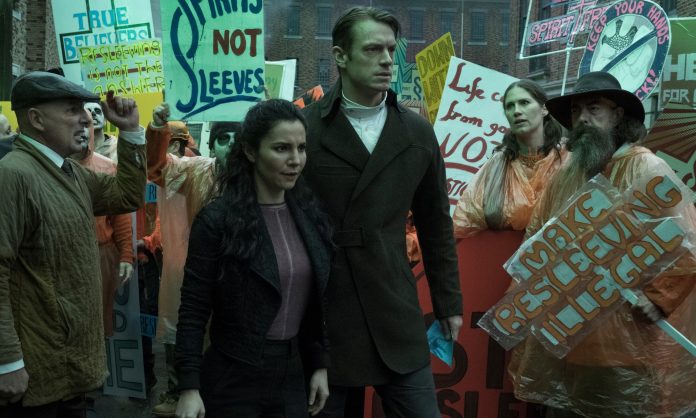
Altered Carbon: has cyberpunk discovered life beyond Blade Runner?

0

The new Netflix adaptation has won fans for its future shocks, but like much dystopian sci-fi it struggles to get away from the shadow of Ridley Scott’s masterpiece

Imagine a Black Mirror future. San Francisco, say, in the 24th century: a depraved new world, but one stacked precariously on the old. A flying cop car knifes through a benighted cityscape glinting with gaudy neon enticements. Far below, a multicultural throng jostles past exotic bazaars and hologram-enhanced fleshpots. In a darkened refuge, an investigator scrolls through footage vital to his big case, verbally instructing a computer to freeze and enhance where required.

These vignettes might sound a little familiar, either as deliberate echoes of Blade Runner or examples plucked from a one-size-fits-all generic cyberpunk techno-dystopia. So it’s a little disappointing that Altered Carbon – Netflix’s luxurious 10-part adaptation of Richard K Morgan’s 2002 sci-fi novel – serves up all of these totemic scenes within its first two episodes. Restaging such familiar material almost feels ritualistic, as if to intentionally summon fond memories of Ridley Scott’s deathless future-noir or its monumental 2017 sequel.

As cultural consumers, we have been bombarded with variations of this future on and off for more than 25 years. Via movies, animation and video games, cyberpunk has become so shopworn that it has become essentially a nostalgic period setting. True to the source material, Altered Carbon takes pains to position itself as hardboiled entertainment, with lurid firearm ultraviolence, chemically enhanced sex and cynical tough-guy narration from its diamond-hard lead, Takeshi Kovacs. But in its own neon-soaked, techno-addled, C-word-dropping way, Altered Carbon initially feels rather cosy, like Downton.

It does, at least, have an additional gimmick. For decades, humans have had the ability to digitise their consciousness. Die and you can simply be restored from your most recent cloud backup, your identity squirted back into a new “sleeve”. This could be a perfect clone of your younger self, the first step in a daisy-chain to immortality. Or you could take someone else’s body for a test-drive: a bodybuilder, a dancer, maybe even a significant other. In Altered Carbon’s far-flung future of 2384, this tech has already been around for more than two centuries. It is a marvel so commonplace that it is seen as banal. Instead, what impresses is the ingenuity with which humans continue to pervert sleeve technology to their own ends, for personal gain or transgressive sexual gratification.

For Kovacs, a convicted war criminal turned prickly sleuth (played, mostly, by recent Robocop Joel Kinnaman), this tech also offers a chance at parole. After spending 250 years with his consciousness filed away in a digital prison’s trash folder, Kovacs is abruptly decanted into a taut new body and tasked with solving the murder of the world’s richest man.

After setting out its stall, Altered Carbon kicks its plot into gear and starts to distinguish itself from the cyberpunk pack in some intriguing ways. Kovacs finds an unexpected ally in an AI hotelier whose chosen hologram form is a highly strung Edgar Allen Poe, replete with great taste in carpets, vintage clothing and heavy weaponry. It’s a pleasingly oddball note. A later episode seems to relish the stomach-churning possibilities of torture in a virtual environment indistinguishable from reality, but leavens its cruelty with an unexpectedly heartwarming side story involving a family Halloween party.

Many of the show’s pleasures are down to good casting: if you’re looking for a ruthless near-immortal to effortlessly lord it over everyone, then James Purefoy – channelling the Dionysian cunning of his Mark Antony in HBO’s Rome – is perfect.

Can Altered Carbon function as a cynical, sexy cyberpunk shoot-’em-up and a meditation on the consequences of severing the connection between mind and body? Or, like some of its illegally duplicated sleeves, is it simply a soulless copy of what came before? Only the faceless AI that tots up Netflix’s viewing data will ever know whether it is a genuine hit, but if you don’t mind some viscera mixed in with your existential mysteries, it does deliver a punchy sci-fi fix.

Altered Carbon is available on Netflix

Source https://www.theguardian.com/tv-and-radio/2018/feb/05/altered-carbon-has-cyberpunk-discovered-life-beyond-blade-runner

Ethical bank Triodos launches investment platform

0

You want to support projects that benefit people and the planet, but you’d also like to get a decent return on your cash if possible.

If that sounds like you, ethical Triodos Bank is offering the chance to put money into projects paying between 5% and 7% interest a year. However, there are risks.

Triodos was founded in the Netherlands and set up an office in the UK in 1995. It recently won the endorsement of McMafia star James Norton – he revealed last month that he had moved his current account from US giant Citibank to Triodos – while actor Sir Mark Rylance has been with it for many years.

Now it has unveiled an ethical investment website: triodoscrowdfunding.co.uk. There are similar sites already out there, including Ethex and Abundance, though Triodos says it is the first UK bank to launch such a platform. It will allow people to invest directly in bonds or equity issued by charities or businesses “that have been extensively screened by Triodos for social and environmental impact, the viability of their business model and the credibility of the management team”.

The first two bond offers are:

 Mendip Renewables, which aims to raise £1.8m by the end of March to take a 5MW operational solar farm in Somerset into community ownership. Triodos says investors can earn 5% a year, increasing in line with the annual retail price index, repayable over 17 years.

 Rendesco, which wants to raise £5.5m to develop green energy from ground source heat pumps, aims to pay 7% a year over seven years.

However, be aware that these investments are not covered by the Financial Services Compensation Scheme, your capital is at risk, and returns are not guaranteed.

Source https://www.theguardian.com/money/2018/feb/03/ethical-bank-triodos-investment-mcmafia-james-norton

The secret to tackling your child’s bullying behaviour

0

Do not collude. There’s never an excuse for bullying and your child needs to know that your sympathies lie with the victim.

Bullying thrives on silence. It takes an honest parent to admit that their child has done something so nasty. If told your child is bullying, try not to go for instant denial, but investigate instead.

Bullying can be learned, so do a little detective work. Have they seen other children act like this or witnessed domestic bullying? Physical violence apart, there are other types of bullying, such as shouting over people or using sulky silences. If this is part of your home life, consider family counselling if you can’t change it alone.

Ask your child how they’d feel if someone bullied them and they were scared to go to school. An awareness of the fear they’ve caused should hopefully make them want to put it right.

If you’re punishing your child, withdraw a treat for a specific time but also suggest they make up for what they’ve done. The reputation of being a bully can linger. Help your child learn the benefits of being kind and fair instead and, since they’ve said sorry, you can now support them all the way.

Source https://www.theguardian.com/money/2018/feb/03/the-secret-to-tackling-your-childs-bullying-behaviour

Deja vu? It’s looking like 1987 again for the US economy

0

It is August 1987 and the US economy is humming along. Memories of the deep recession earlier in the decade are fading fast. Tom Wolfe is about to publish The Bonfire of the Vanities, which captures perfectly Wall Street’s greedy bullishness.

The financial markets have Paul Volcker to thank for rising share prices. As chairman of America’s central bank, the Federal Reserve, Volcker had given the US economy shock treatment to rid it of its inflationary excesses. Record-high interest rates triggered the worst recession in the US since the 1930s, but once inflation started to come down borrowing costs were cut sharply and the economy recovered.

The president at the time, Ronald Reagan, showed little gratitude for the boom that won him a second term with a landslide victory in 1984. Volcker, who had been appointed by Reagan’s predecessor, the Democrat Jimmy Carter, was seen as insufficiently keen on Reagan’s plans for financial deregulation, so he was replaced by someone deemed to be more on message: Alan Greenspan. Two months later, in October 1987, there was a market meltdown.

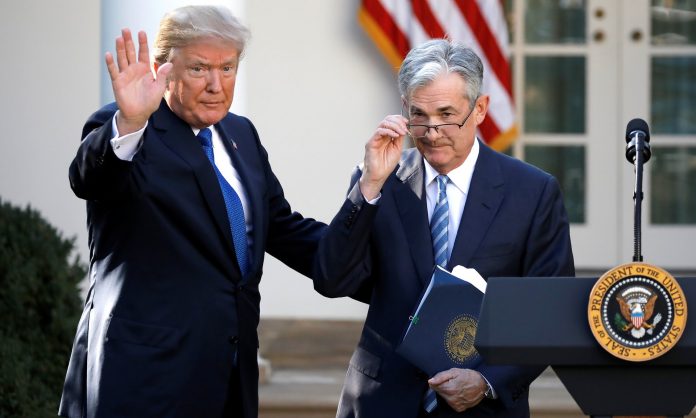
Sound familiar? As in 1987, the US economy has been growing at a fair lick. Unemployment is low and signs of inflation are starting to appear. As in 1987, the dollar is weak and share prices have been on a sustained upward run. And as in 1987, a Republican president has just replaced an old hand at the Federal Reserve with someone new. Janet Yellen presided over her last meeting as chair in the middle of a week that saw wobbles in both the stock and bond markets. Trump got rid of her for the same reasons that Reagan got rid of Volcker, She was a Democrat and not wild about deregulation.

As it happens, Yellen may just have got out in time after helping to give Trump the dream start to his presidency, a year in the Oval office that has seen solid growth, more people in work and Wall Street breaking records on a regular basis. Jerome Powell, her replacement, has been put there by the White House to provide more of the same, something that is going to be a lot more difficult than Trump appears to think.

For a start, Wall Street is starting to worry about rising inflation. Last week’s jobs report showed unemployment at 4.1%, its lowest for 17 years, and average hourly earnings rising at an annual rate of 2.9%, the highest in eight years. The weakness of the dollar makes imports dearer, while Trump’s tax cuts will kick in at the worst possible moment, toward the end of a long cyclical upswing when there is a danger of the economy overheating.

Up until now, the Fed has been acting with extreme caution. Interest rates have been raised in baby steps and with ample warning. Wall Street thought Yellen had got her strategy just about right. Stimulus was being removed in order to forestall any pickup in inflation, but not so rapidly as to choke off growth.

Last week saw a different mood in the markets. Now there is concern that the Fed is a bit behind the curve and will be forced into tougher action than the markets had hitherto been expecting. The chances of a misstep have increased at a time when it has a rookie in the top job.

The default position in the markets is that last week was just a squall that will quickly blow over. Economic fundamentals, it is said, are good and there will be no real inflationary threat from rising earnings provided productivity also picks up.

But the Goldilocks scenario – not too hot, not too cold but just right – doesn’t really stack up. Investment and productivity have both been poor since the financial crisis of a decade ago. Household debt is high and consumers have only been able to fund their spending by dipping into their savings or by borrowing more.

As the years roll by, it becomes ever clearer that the collapse of Lehman Brothers in September 2008 was not a cathartic event. The sub-prime mortgage crisis was supposed to be the bubble of all bubbles, yet here we are 10 years later watching speculators pile in and out of bitcoin. In two years it will be the 300th anniversary of the South Sea bubble. History has a strange way of repeating itself.

Speculation has thrived in recent years because central banks pumped money into the financial system through record-low interest rates and quantitative easing. This prevented the banks from going bust and ensured that the recession of 2008-09 was not as severe as the Great Depression of the 1930s, but at a cost.

Markets now think that if they act irresponsibly and cause another speculative boom-bust the response from central banks will be zero – or negative – interest rates and another splurge of QE. The monetary authorities have created a huge moral hazard problem for themselves.

Central banks did enough in 2008-09 to prevent the collapse of capitalism. The coming period will show whether that breathing space was used to make good the structural weaknesses exposed by the crisis: debt dependency, rising inequality, under-investment. If that is the case, last week will indeed just have been a wobble.

But that’s not really the way it looks, and Donald Trump was perhaps tempting fate in Davos when he boasted that the stock market was constantly smashing records as a result of his economic stewardship.

Trouble tends to arrive quickly for new Fed chairs. With Greenspan it was within two months. For his successor Ben Bernanke, it was 18 months before the sky fell in. Powell would be well advised to brush up on how to handle a financial crisis.

Source https://www.theguardian.com/business/2018/feb/04/is-this-the-1987-us-economy-or-just-deja-vu

Asia Pacific shares pummelled as inflation shadow spooks bonds

0

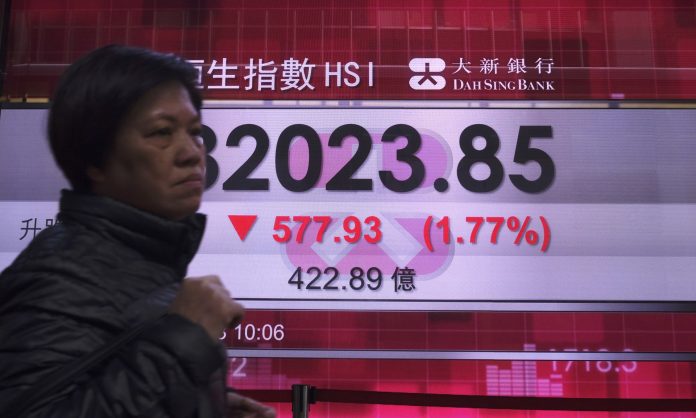
Share markets in Asia have suffered their biggest selloff for more than a year as fears of rising inflation battered the bond market, toppled Wall Street from record highs and sparked speculation that central banks could raise interest rates.

Most major bourses across the Asia Pacific region fell in Monday trading as investors took fright at jobs figures from the US last week which showed wages growing at their fastest pace since 2009 and fuelling expectations that inflation was making a comeback after years of price stagnation.

Japan’s Nikkei sank 2.55% in its biggest fall since the day of Donald Trump’s election win, while Hong Kong was down more than 1%. In Australia the ASX200 index closed down 1.6%, or 95 points to 6,026, wiping a total of $33bn from the value of the market.

Futures trading indicated that the FTSE100 index would fall more ethan 1% at the open on Monday, or around 78 points. The markets also reacted by pricing in the risk of three, or even more, interest rate rises from the US Federal Reserve this year.

“It’s going to be a nervous start to the week for traders across all markets as they wonder if last week’s reversal in US stocks and the ugly close Friday … is likely the start of something bigger,” said Greg McKenna, chief market strategist at AxiTrader in Australia.

Australia’s Reserve Bank board meets on Tuesday to deliberate on interest rate policy. It is expected to keep borrowing costs on hold at 1.5% but the rise in bond yields increases the chances of the next move being upwards.

Yields on 10-year US treasury paper were up at a four-year peak of 2.86%, having jumped almost 7 basis points on Friday. Rising bond yields are an indicator that markets expect the cost of borrowing to rise.

Shares on Wall Street were already seen as expensive by many historical measures and sold off in reaction.

“It has to be remembered that US shares were priced for perfection at around 19 times earnings,” said Craig James, chief economist at Australian fund manager CommSec, noting the historic average is around 15 times.

“Still, US companies have produced stellar earnings over the reporting period. So it is understandable that some ’irrational exuberance’ would emerge.”

With half of the S&P 500 companies having reported, 78% have beaten expectations against an average 64%.

The lift in US yields provided some initial support to the dollar after a rocky start to the year, though it was starting to lose out again in Asian trade. Against a basket of currencies, the dollar was down a fraction at 89.154 having climbed 0.6% on Friday for its biggest single day gain in three months.

The dollar backed off to 109.95 yen from an early 110.29, while the euro was barely changed at $1.2457. The pound was up slightly at $1.412.

Any rally in the US dollar is considered a negative for commodities priced in the currency. Gold was off a touch at $1,330.47 an ounce after losing 1% on Friday. In oil markets, U.S. crude fell 66 cents to $64.79 a barrel, while Brent lost 71 cents to $67.87.

Source https://www.theguardian.com/business/2018/feb/05/asia-pacific-shares-pummelled-as-inflation-shadow-spooks-bonds

Bitcoin price LIVE: Bitcoin plunges to $7k as Lloyds Bank bans credit card crypto buys

0
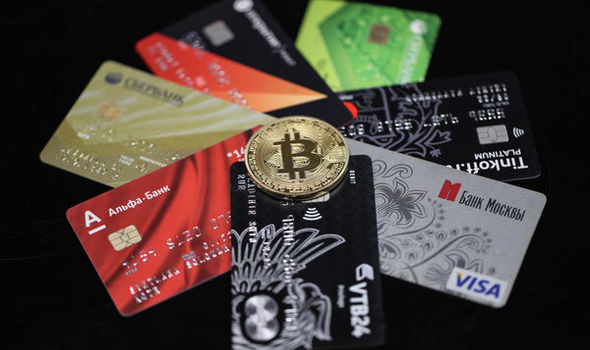
The ban extends to other household names in the banking giant’s credit card family including Bank of Scotland, Halifax and MBNA.Wallet holders would have been hoping for a better start to the week but news of another mainstream finance firm being spooked by price volatility and regulatory threats means that other credit cards retailers around the world will be studying the fallout from Lloyds’ ban.The Lloyds group has over eight million credit card customers and the ban stems from the fear that customers began buying cryptocurrencies to make a quick profit in the run-up to Christmas.

However, with the price now significantly below the mark many UK buyers paid for their cryptocurrencies, Lloyds’ customers are now servicing a debt much higher than the worth of of the digital tokens in their wallets.

Lloyds is concerned about its exposure to crypto-risk as it could end up footing the bill for unpaid debts should the price continue to fall.

A Lloyds spokeswoman told the BBC: “We continually review our products and procedures and this is part of that.”

A number of US credit card firms have also banned crypto purchases on credit cards.

Bank of America began blocking cryptocurrency purchases on Friday while JPMorgan did the same on Saturday.

Citigroup will soon stop cryptocurrency purchases on credit, following on from Capital One and Discover.

All of the top five credit card issuers in the US have now announced or implemented bans, according to Fortune.

Source https://www.express.co.uk/finance/city/914520/Bitcoin-price-LIVE-falling-latest-ripple-ethereum-blockchain-lloyds-bank-credit-card

How can I remove unwanted apps from Windows 10?

0

Every operating system includes features that some people don’t like or need. It’s even more of a problem with Google Android, which I use, so I understand the annoyance. However, on a Surface Pro 4, removing the Microsoft apps is not going to save a significant amount of space, nor is it going to make the slightest difference to performance.

The time and effort you spend removing these programs will have no practical benefits, and Microsoft may well reinstall them with every operating system upgrade, which is twice a year, if not before. (Windows 10 runs an SIHClient – for Server-Initiated Healing – every day to repair any damage to the operating system.) You will therefore be committed to wasting even more time for the foreseeable future.

Nonetheless, you can hide or remove many programs, including very old ones such as Windows Media Player and Internet Explorer 11. You can certainly remove the trial copy of Microsoft Office, which may have been pre-installed on your PC. At least that saves some space. So does removing the free games. However, you should not uninstall the Windows Store app or the Edge browser.

Apps and placeholders

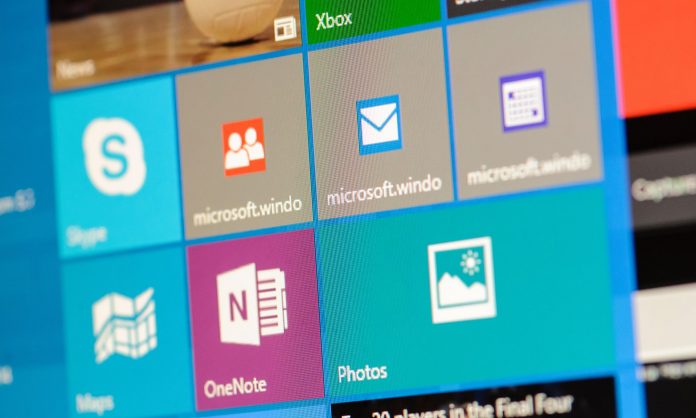
Some Microsoft programs have tiles or appear on the Start menu. You can make them go away by right-clicking them and selecting “Uninstall” or at the very least “Unpin from Start” from the drop-down menu.

If not, run the Settings app and click “Apps & features”. This lists your apps and programs and tells you how much space each is taking up. Click on a program you don’t want and you may be offered the option to uninstall it.

Otherwise, Piriform’s CCleaner Free provides a simple way to remove most of the bundled apps. Run CCleaner Free and click Tools (the spanner icon) to get a list of programs. Click on Publisher to sort that column so that all the Microsoft apps are together.

The Edge browser is part of Windows 10, and its components can be used by other software to display HTML files. The EdgeHTML rendering engine is also available to third-party programs, which saves everyone from shipping their own rendering engine with every application. It should therefore save space in the long run. Removing it may well break functionality.

Edge is a good browser, and worth keeping if only as a backup. It has an Adobe Flash Player and a PDF reader built in, and it’s excellent for viewing online videos. It doesn’t have as many features as its rivals, or as many extensions, but it is improving steadily. It also follows web standards. What it doesn’t do is support websites written for Internet Explorer, which is why IE11 is still included in Windows 10.

Edge also forms part of Microsoft’s “intelligent assistant” system, which includes Cortana, Edge and the Bing search engine. Both Google and Apple use the same sort of architecture with their own assistants, browsers and back-ends.

Cortana

Cortana does two things in Windows 10. First, it runs the local search system. Second, Cortana is a cloud-based digital assistant, like the similarly cloud-based Amazon Alexa. There’s no point in removing the former, and most of the latter isn’t on your PC. What you can do is stop Cortana from gathering information about you.

Run the Settings app, click the Cortana icon, and work through all the options. The section called Permissions & History includes “Change what Cortana knows about me in the cloud”. Clicking this will produce a pop-up headed “Personal Information”. Scroll to the bottom and click the button marked Clear to delete it all. Alternatively, you can go online to see and delete all the information Microsoft holds in the cloud, including Cortana.

Microsoft’s help page, Cortana and privacy, provides a good guide to turning off Cortana’s information sources, if they have been turned on.

Cortana can be annoying when she loads Edge to search the web, but you can avoid this. When you click in the search box, pick either Apps or Documents and avoid Web. If you go to the top and click the down-arrow next to Filters, you can restrict searches even further by selecting Emails, Music, People, Photos, Videos etc from the list.

However, you can easily turn Cortana off by signing out, which is how Cortana works on Android and Apple iOS as well. Click on Cortana’s Notebook, select About Me, click on your email address and then click “Sign out”.

If none of this is enough, you can disable Cortana by editing the registry in Windows 10 Home, at your own risk. See How-To Geek for details. In the Pro and Enterprise versions of Windows 10, you can enable or disable Cortana by checking the “Allow Cortana” entry in the group policy editor, which does the same thing.

Programs and features

Advertisement

As mentioned, the Settings app uninstalls programs, but it hasn’t completely replaced the old Control Panel. To run this, type “co” in the search box and run the program when it appears.

The Control Panel only lists programs that run in the traditional Windows subsystem, known as Win32. It does not list new-style apps that run in the cross-platform Windows Runtime subsystem, WinRT, but check the list anyway, to see if there is anything you want to remove.

After that, go to the lefthand menu and click “Turn Windows features on or off”. This pops up a box where you can add features that you might want – an FTP Server, a Telnet client, the Linux subsystem – and remove ones you don’t. Windows Media Player and IE11 appear here, though I recommend keeping both.

However, if SMB 1.0 is enabled, untick it to remove it. It’s insecure and you don’t need it.

Note that neither Notepad nor WordPad is mentioned in any of these lists, nor do they appear on the Start menu. Both are included in Windows 10 so that you can read documents and log files without having to download another application, and you can run them from the search box.

Stop hating apps!

Many users seem to dislike modern (WinRT) apps, but that doesn’t make sense. Modern apps are safer to run and easier to install and uninstall, because they don’t use the registry. They are remotely maintained without running an updater in the background, and work well with touch. Many run equally well on Intel and ARM processors. What’s not to like?

If you change your mind, you can re-install Windows 10 apps from the Windows Store. You can also add apps from Microsoft and other suppliers. Potentially useful free apps include OneDrive and Dropbox Mobile, Facebook and Facebook Messenger, Twitter, Unigram (a Telegram client), Todoist, Adobe Photoshop Express, Xodo PDF Reader & Editor, Netflix, TuneIn Radio, Deezer Music, SoundByte (for SoundCloud etc), Grover Pro (for podcasts), Tubecast for YouTube, Audiobooks from Audible, Plex and Microsoft Remote Desktop. Paid-for apps include Nebo, for making handwritten notes on your Surface Pro 4, and Staffpad for writing music.

Once you’ve used a few good apps, you might even get to like them …

Source https://www.theguardian.com/technology/askjack/2018/jan/18/how-can-i-remove-unwanted-apps-from-windows-10

TOPLASER THE CUSTOMIZED METHOD FOR THE CARE OF VISUAL DEFECTS – FROM ITALY TO ABROAD

0

In the last few years the surgery of visual defects (myopia, astigmatism, hypermetropia and presbyopia) has recorded extraordinary progress in terms of precision, and above all of safety. The most modern methods are now more and more adapted to the needs of the individual patient, his age and the conditions to be treated. The TOPLASER method is born to be the maximum of the personalization of this surgery. To illustrate the advantages of this path is its creator, dr. Marco Di Chiaro, known Oculist Surgeon, who receives in Perugia, Rome, Milan, Pisa and Verona.

Dr. Di Chiaro, laser technology has existed for at least 20 years, but today?

Even in this medical branch the natural technological evolution has allowed us to have an incredible development. We can get unimaginable results until some time ago. To date, the standard is to operate a patient at 5 o’clock in the afternoon, and see him come back the next morning to the inspection visit with more than 10/10 of sight, and glasses forgotten in the drawer. All in absolute tranquility. The Toplaser method, which I conceived and filed as a trademark at the Ministry of Economic Development, aims to totally increase the safety and the results of this surgery, exploiting the characteristics and the correct use of all the most modern lasers currently on the market. It is the concept of maximum personalization: we use the most suitable instrument and software for every single patient, who will therefore have the certainty of being operated in the safest way for him. A real tailored suit instead of a warehouse dress.

Year 2017. From Italy abroad …

Exactly. The results we obtain with these protocols push us beyond Italian borders. The next objective will be to export the method and brand abroad, in clinics and medical centers in England, Spain and France. All this, always thinking about patient safety, first of all.

For info (www.toplaser.it)

SGM Energy, the strength of a young and dynamic Group

0

Professionalism, experience and international market knowledge are the distinctive features of the company

Strategically located in a strategic point for the development of the Mediterranean area, in the industrial area of ​​Morcone (BN), a point of connection between the Tyrrhenian and the Adriatic side of the Italian peninsula, SGM Energy Srl has affirmed its leadership in commercialization wholesale of lubricants for industry, automotive and agriculture, also acting as brokers between European companies and operators in the sector of the national territory. Founded in June 2011, over the years, however, this young and dynamic reality has changed its core business: from 2014 it began, in fact, to offer logistics and deposit services to other industry players and aimed at creating a new supply chain. commercial consisting of direct sales points and franchises. To illustrate in detail the corporate mission, is the dott. Vincenzo Mignano, founder of the Group.
Dr. Mignano, the company you direct which services offers to customers?
SGM Energy Srl is at the service of companies operating in the lubricants sector, which do not have an authorized structure, which for convenience prefer to use a “turnkey” outsourcing service and which seek to make use of the precious collaboration of a serious partner and reliable; a partner that has consolidated its position in the reference market with a strong know-how and a long experience in a highly exclusive sector. Being, in fact, regulated by a very strict legislation, to date only a few operators are able to obtain the licenses and authorizations necessary to operate in full compliance with the legislation in force. In light of this, SGM Energy Srl is a service provider, offering companies that require a complete service regarding logistics, storage and regulatory requirements and acting as a guarantor in international relations with its partners.
What is the corporate mission?
With the aim of expanding its horizons, aiming at an internationalization of the corporate vision, in the short term the company has the following strategic objectives:
• create and patent software that manages to unify the management of business processes, in the specific sector, in full compliance with the dictates of Legislative Decree 504/95 (T.U. Accise);
• transferring its know-how to other companies in the sector;
• shorten the commercial chain by making competitive partners and affiliates.
What are the company’s strengths compared to the competition?
The consolidated experience in the sector, a high regulatory know-how (Legislative Decree 504/95 TU Accise), international market knowledge, industrial and managerial assets, the continuous R & D activities implemented by the company to find new outlets and new squares with relative transfer of skills and knowledge, the audacity and perseverance of a Group that knew and wanted to innovate, considering the change the main key to success, are the reasons that allowed SGM Energy Srl to retain its customers, among which stand out multinationals of the oil, energy, automotive and transport sectors. In addition to maximizing customer care, the company aims to establish long-lasting business relationships with new partners, both nationally and internationally, thanks to its “distruptive” vision of the European borders.
In conclusion, how do you see the entrepreneurial future of our country?
A society in existential lethargy, a country no longer able to plan the future, unable to develop an entrepreneurial reserve that represents its backbone and therefore remains a prisoner of the great economic, political and social subjects that have led the country in past years . To stop Italy’s decline, we need a season of radical reforms in the economic, social and institutional fields. Rediscovering the path of growth and widespread prosperity is only possible if entrepreneurs are truly free to work, invest and innovate, if the country returns attractive for the talents and capitals of the world, and if the policy will bring down the too many corporate privileges that guarantee the positions of income of the few to the disadvantage of the many, stifling the energies and humiliating the legitimate expectations of the younger generation. Exactly what I do not want for my children.

For more info (amministrazione@sgmoil.com) (www.sgmoil.com)
by Roberta Imbimbo

Recent Posts

Most Popular

Three Generations, one Vision: the Story of Alpacom between Innovation and Sustainability

In the Italian construction landscape, few sectors have evolved as rapidly as the field of prefabricated systems for window openings. Alpacom—now led by its...

Healthcare Liability: Implementing Decree 232/2023 of the Gelli-Bianco Law

Seven years after the introduction of the Gelli-Bianco Law, the long-awaited Implementing Decree has finally been issued, defining its most expected aspects: insurance obligations,...

GGT: Italian Excellence in Power Transmission

Founded in 2011, in the midst of the global economic crisis, GGT is today an international benchmark in the production of components for the...

In the Heart of Central Italy, a “Consulting Boutique” Speaking to the World

Born from the vision of Salvatore Santucci, Santucci & Partners is an independent management consulting firm based in Central Italy. With a team of...

Ozone Therapy in Dentistry: The Natural Revolution Transforming the Future of Dental Treatments

Although ozone therapy has long been known in medicine, its application in dentistry today represents one of the most promising innovations in the field....