Innovation, digitalisation and highly specialised skills: these are the distinctive traits of STI Corporate, the holding company of a group of companies highly specialised in engineering and consulting services, which over time has broadened its core business to include other strategic activities. In fact, it has added digital tools and skills to its consolidated services, which range from planning to the management of a project’s entire life cycle, allowing the Group to present itself on the market as a future-oriented reality, able to offer a wide range of latest-generation digital services, always with environmental sustainability and the enhancement of human capital at heart. “With a presence in 8 different countries and 5 offices across the country, this all-Italian excellence is the ideal partner to accompany industry towards the digital production model,” says Stefano Massarino, Chairman of the company, in this interview. by Roberta Imbimbo
Dr. Massarino, with what mission was STI Corporate born? Founded in Friuli-Venezia Giulia in 2022 as the holding company of a group of companies that for over thirty years have been offering design and engineering consultancy services to leading international clients in the Building, Industrial, Energy & Chemical and Marine sectors, supporting them in the process of transforming their needs into sustainable, high-performance works, over time STI Corporate Spa has expanded its core business to other strategic activities, experiencing exponential growth at a global level: today, the Benefit Corporation controls no less than 9 companies, of which two in Italy and seven abroad, in Oman, Saudi Arabia, Mexico, Slovenia, Russia, Paraguay and Argentina. Its core activity is to offer all-round engineering services, thanks to four highly specialised business lines. STI Engineering, present on the market since 1990, is a design company offering multidisciplinary engineering services and technical-managerial consultancy at a global level. STI Management offers Project Management services, managing them in all their evolutionary phases, respecting the expectations in terms of Quality, Time and Cost agreed with the Customer. STI Automation deals with plant and industrial process automation and STI Digital aims to support its customers in the digital transition, positioning itself on the international market as a qualified and reliable partner for the management of assets, throughout their complete life cycle, with innovative and fully digital tools. What peculiarities distinguish you from your competitors? We are the fruit of the diversity in which we grew up and in which we operate today. Different countries, different services and totally different market sectors have allowed us to measure ourselves with methods of approach, objectives, sensitivity and culture that in the end, and with not a few sacrifices, have turned into a tangible competitive advantage. In addition to this, our Vision of ‘Generating always superior solutions, always staying one step ahead and with a positive impact on people’ has made and continues to make an important and further difference. An example of this is the newly born STI Digital services, the fruit of 30 years of experience in the market brought together in a digital solution that allows people to interact more with physical assets. Let’s make the assets ‘talk’ and not be ventriloquists.
For more info: www.sti-corporate.com info@sti-corporate.com
Exactly one year after our last interview, we decided to meet again with Mr. Roberto Melis, of Freedom In Sales S.r.l., a young and dynamic company certified by IATA (International Air Transport Association), set up in 2012 to offer shippers, airlines, handling agents and their local representatives its high added-value services (from the sale and management of dedicated air space following ‘follow-up’, to ad hoc accessory services, from assistance to airports that are experiencing some critical issues in this last period, to the management of special cargo). “Cargo traffic at Italian airports has recorded a significant drop compared to the previous year,” says the owner of this all-Italian excellence in this lengthy interview; one of the most important companies active in air transport, which has managed to impose its leadership in a highly competitive market thanks to the expertise gained over many years of activity and the high professionalism of its specialised and qualified staff. by Roberta Imbimbo
Dr Melis, can you update us on the current situation in air transport? With the pandemic now behind us, the global air transport market finally seems to be showing signs of stabilisation. Data released by the International Air Transport Association (IATA) indicate that the number of passengers transported has grown with renewed vigour: at Italian airports alone, 89,303,818 passengers transited in the first six months of 2023, of which 31.9 million related to domestic traffic and 57.4 million to international traffic, with an increase of +12 per cent and +41.5 per cent respectively compared to 2022. As far as the cargo sector is concerned, on the other hand, it must be pointed out that Italian exports unfortunately dropped considerably: 508,992 tonnes of goods were handled, with a drop of -6 per cent compared to the previous year, and even more accentuated in air transport; a drop caused without a shadow of a doubt by the current scenario of geopolitical uncertainty recorded worldwide. The long wave of the Covid, the Russian invasion in Ukraine, and the recent war in the Middle East have in fact caused a sudden change in the global macroeconomic scenario, which is still grappling with the consequent critical supply situation of certain raw materials.
In this global scenario, how has your business evolved? During this period, we have worked hard to continue the virtuous path we have been following for several years, to innovate strategically, and not to lose the important business opportunities offered by a market that, despite the strong world instability caused precisely by wars and the consequent new geopolitical risks, looks to the future with optimism (Italy is the second largest market in Europe in terms of volumes of goods transported by air after Germany, and estimates predict a doubling of its international trade in the next two decades). Despite the collapse in airfares caused by the increase in global air capacity, we managed to record significant growth in terms of tonnage transported, while turnover obviously dropped significantly compared to previous years. Nevertheless, we have managed to remain proactive and positive in the market, increase our brand reputation and position ourselves among the leading companies in the industry. Today, Freedom in Sales is in fact an important link between airlines, their local representatives and freight forwarders and handling agents, especially airlines and gssa, who increasingly choose it as a qualified and reliable sales partner. Thanks to its strategic vision, the company has managed to significantly increase its customer base and strengthen a number of strategic partnerships, in order to be increasingly attractive and competitive in the global market. It is no coincidence that today it is considered one of the main references in Italy for the export of goods to North America. Despite its achievements to date, the company aims to grow further, focusing on what it already excels in, without neglecting new avenues and opportunities. For more info (http://www.freedominsales-fis.it)
With the mechanism of the so-called ‘medical device payback’ – introduced in 2015 by the Renzi government, but in fact never applied until now – the state intends to offset the increase in public healthcare spending for the purchase of medical devices, shifting part of the costs for healthcare from the regional budget holes onto the companies in the sector, which thus risk not even covering their costs and going bankrupt. As can be easily deduced, the legislator’s choice is frightening and unreasonable in many respects – it is no coincidence that the Lazio Regional Administrative Court, section III-quater, doubts the constitutionality of the rule and has referred the matter to the Constitutional Court for violation of Articles 3, 23, 41 and 117 of the Constitution. Among the hypotheses of unconstitutionality, the violation of free private economic initiative stands out since, especially SMEs in the health sector (about 80% of national hospital suppliers), would be subjected to an unforeseen and unpredictable cost and could disappear. Illustrating the impact of this legislation on Italian SMEs is Dr. Gennaro Broya de Lucia, president of PMI Sanità, the new National Association of Small and Medium-sized Enterprises committed to supplying hospitals with the material needed for diagnosis and treatment of Italians.
by Roberta Imbimbo
Dr Broya de Lucia, what are the main regulatory changes regarding the so-called ‘payback’ with reference to the supply of medical devices? The payback mechanism comes into play when regions continue to purchase medical devices that are essential for surgery and the provision of hospital care above the threshold of 4.4% of total healthcare expenditure. This threshold, which was already inadequate when it was identified back in 2011, because it was underestimated by 50% compared to the European average, imposes real ‘balancing acts’ on the regions in order to deliver care and operate hospitals. We would have expected an adjustment of this barrier, but instead we have found ourselves with a law that calls in the suppliers of devices, asking them to participate in the compensation even to the extent of 50% of the deviation. It is easy to deduce, therefore, that we are talking about substantial sums, currently estimated at around EUR 2.1 billion for the relevant years (2015-2018), which the supplier companies would have had to pay into the state coffers by January 2022, or which the regions could have even offset against the invoices still unpaid to the companies for the supply of the devices, up to the amount of the alleged debt.
In short, a real drain on Italian SMEs… Unfortunately, yes! Then again, on closer inspection, it is a rule born of a lack of knowledge of the sector because it was designed for a totally different sector from that of medical devices, i.e. the pharmaceutical sector. Unlike the pharmaceutical market, in fact, where the payback acts as a sort of discount to the final balance (given that most drugs are ‘negotiated’ with the AIFA), the medical device purchasing mechanism is always subject to public tenders with a budgeted expenditure ceiling, on which a downward competitive procedure is launched between the various competitors from all over Europe! This means that discounting already takes place upstream and is often as high as 30-40% of the auction base price. Moreover, even if forced to sell below cost due to the application of payback, medical device supply companies cannot even refuse to supply, not only out of conscience but under penalty of prosecution for interruption of a public service!
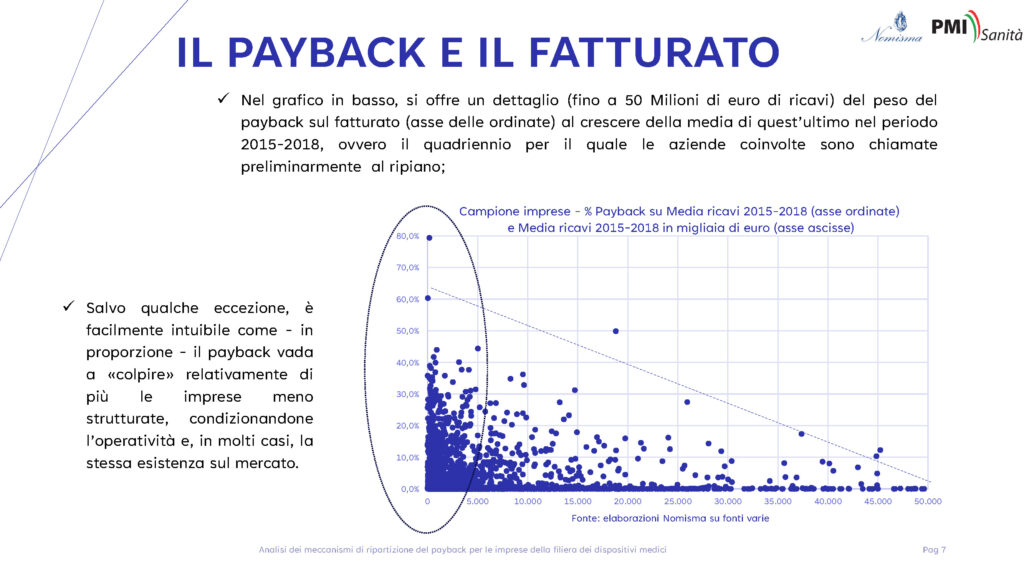
If not repealed by the government, what would be the consequences of this legislation on the companies in the health sector? If the government did not repeal the payback, we would be faced with severe criticalities, not to mention that if this mechanism were to pass, who would prohibit it from being applied to other sectors as well? A recent study by Nomisma, which we commissioned, entitled ‘The impact of the payback on companies in the supply chain’, shows that there are over 2,000 companies and 200,000 jobs that could vanish as a result of the payback demand on medical devices. According to this survey – which involved a sample of 4,000 active companies throughout the country – this mechanism would mainly affect SMEs, conditioning their operations and very survival, since they would be called upon to pay an amount equal to over 60 per cent of the entire value of turnover (not profits!) in the last financial year. It is estimated that about 85% of SMEs would go bankrupt due to an economic taxation greater than the value of the company itself.
In short, we would be heading for catastrophe… The payback would have a negative impact on employment levels (around 150,000 workers would be at risk of dismissal). In addition, the inevitable closure of small and medium-sized enterprises would lead to a halt in the supply of stents, heart valves, and life-saving devices to hospitals, further penalising citizens in need of care; what’s more, even multinationals, which initially survived the phenomenon thanks to generous financial possibilities, would no longer have any ambition to invest and operate in Italy, on pain of constant and now-conscious subjection to operating losses.
SMEs are the real engine of the Italian economy. With the aim of continuously assisting them and enhancing their social role, therefore, as well as blocking the unjustified burdens imposed by the payback, PMI Sanità, a strongly representative trade association, was born. Exactly. For years, the National Health System, one of the most competitive in Europe, has been guaranteeing high quality services thanks to the professionalism and continuous investments made particularly by SMEs in the sector. In our country there are about 2,500 production SMEs, 1,600 distribution companies and 380 service companies, which together produce or distribute medical devices for a total volume of more than 10 billion euros. Companies that invest in young people and professionalism because they are repositories of highly specialised know-how that should be protected and not harassed! More than 80 per cent of supply contracts with public administrations are in the hands of SMEs, and it is from this awareness that our commitment to act on the planning and development of a sustainable and value-based procurement system stems, as we recently reiterated with the president of the Italian HTA Society Giandomenico Nollo. Until now, however, there has been a lack of an association that represents and defines the programmatic lines of a common action for SMEs in the sector and develops a constructive dialogue with the institutions. PMI Sanità was set up with the ambitious objective of constantly assisting its member companies and guaranteeing their operability on the market, clamouring for the launch of a decidedly fairer health expenditure control mechanism, the raising of the expenditure ceilings for medical devices to European levels, and the enhancement of their role in the Italian Health System.
For more info (https://www.pmisanita.org associazione@pmisanita.org)
Founded in 2010, from the far-sighted idea of Calabrian engineer Giuseppe Cervarolo, Cervarolo Ingegneria is a company highly specialised in the design and supervision of public works throughout Italy. Thanks to its highly specialised know-how, matured over many years of experience, and a team of 40 qualified and goal-oriented professionals, this all-Italian excellence has managed to assert its leadership in a highly competitive market, becoming an important point of reference in the field of school construction, healthcare, urban regeneration, and hydrogeological risk. In this long interview, Giuseppe Cervarolo talks about how important it is today to promote the overall efficiency of the construction process. by Roberta Imbimbo
Mr Cervarolo, with what mission was Cervarolo Ingegneria born? The company was established in 2010 in the province of Cosenza, with the objective of becoming an important reference point in the field of public works design and management, offering efficient and effective technical services in terms of quality, time, and costs. A challenge won thanks to highly specialised know-how and a multidisciplinary team of 40 professionals, all qualified, motivated and goal-oriented. Present in 17 Italian regions, in recent years Cervarolo Ingegneria has experienced exponential growth both in terms of turnover (more than doubled after the Covid period), and in terms of organisational structure and geographical expansion with the opening of new offices in Pisa, Milan, and Rome, thanks to which it is now able to operate throughout the country.
What peculiarities distinguish you from your competitors? Thanks to a strategic vision and an innovative business approach, Cervarolo Ingegneria has managed to assert its leadership in a highly competitive market, clearly distinguishing itself from other players by the high quality of the services offered. Another highly distinctive element with high added value is the high number of young people in the company (the average age is around 30): in fact, the Management has always decided to focus on new talents to successfully face the challenges imposed by an increasingly globalised and digitalised market, and above all to re-launch an area that needs to become increasingly competitive and attractive, able to offer job prospects and personal fulfilment at the highest levels. Young people are our hope for a better tomorrow, and the fact that our company has decided to invest in them is a sign that in recent years it has been working in the right direction, with the aim of offering concrete hope to young people in Calabria to realise their professional dreams in the land where they were born and raised. In short, Cervarolo Ingegneria is today a young and dynamic, future-oriented company that is always up-to-date on the latest market developments, and seeks to curb the brain drain from its beloved land.
How important is the topic of sustainable building today? What does it really mean to design and realise a sustainable building? Today, the topic of sustainable building is strategically important, so much so that it is included in the Sustainable Development Goals (SDGs) of the United Nations (UN) 2030 Agenda. With this in mind, our mission is to design and realise high-performance and sustainable works, focusing increasingly on recyclable materials (we have realised several wooden works that guarantee a high level of seismic safety, energy efficiency and acoustic efficiency; the properties of wood also make it possible to substantially reduce the heating and cooling costs of the various structures, making them both more sustainable and more economical) and on increasingly advanced tools for analysing the environmental impact of a building. Designing and realising a new generation building product therefore means adopting innovative design, construction and plant engineering solutions, capable of limiting energy dispersion while guaranteeing high standards of safety and efficiency of the envelope and plant engineering. Thanks to increasingly high-performance recyclable materials and state-of-the-art methodologies, it is now possible to make construction processes more efficient and cost-effective. For example, it is possible to build off-site, i.e. to realise projects in the factory and then bring them to the construction site to assemble them; this is a very important revolution that allows for more efficient and precise production (reducing margins of error and the inconvenience and risks on the construction site), with lower costs and less waste. In urban regeneration projects, our goal is to avoid the consumption of new land and create green lungs within cities, with the aim of revitalising the urban landscape (historic centres, disused areas, suburbs) both culturally and economically and socially, always keeping the aspect of environmental sustainability at heart.
Many goals have been achieved to date. Future goals? To continue to grow, exploring hitherto unexplored markets and expanding the core business to other strategic activities, such as the design and construction of high quality accommodation facilities and luxury private structures, always operating in a conscious and innovative manner. For more info (https://www.cervaroloingegneria.it)
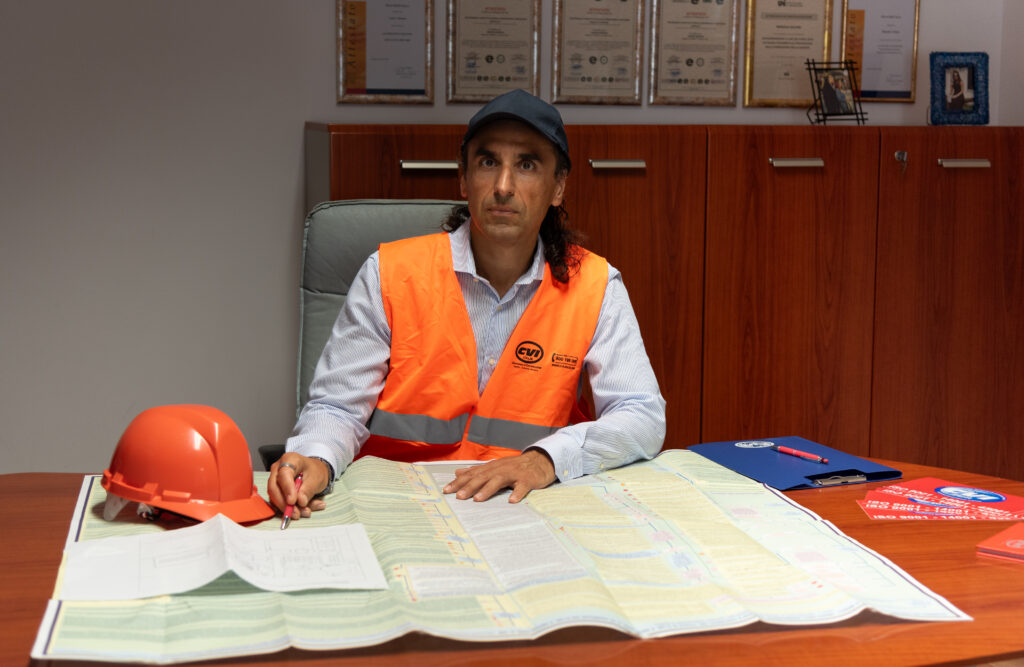
Legislative Decree No. 24 of 10 March 2023 stems from the need to implement Directive (EU) 2019/1937 of the European Parliament and of the Council on the protection of persons who report breaches of Union law or who report breaches of national laws. “This Directive, which introduced a set of common minimum standards aimed at guaranteeing a high level of protection to public and private whistleblowers, undoubtedly represents an important tool for the prevention of wrongdoing,” says Manolo Valori, Technical Director of CVI Italia, the Italian branch of the Slovakian group CVI SRO, one of the most important realities in the voluntary certification sector with international accreditation, in this lengthy interview. by Roberta Imbimbo
Dr Valori, what does Legislative Decree 24 of 10/2/23 provide for and why is it so important? A premise is necessary. Those who work for, or are in contact with, a public or private organisation in the course of their professional activity are often the first person to become aware of threats or harm to the public interest arising in that sphere. By reporting violations of EU or national law that harm the public interest, Whistleblowers play a decisive role in exposing and preventing such violations, in the interest of society as a whole, of course. Potential whistleblowers are, however, often reluctant to report such wrongdoings for fear of possible retaliation. This is why, in this context, the importance of ensuring a balanced and effective protection of whistleblowers is extremely important and increasingly recognised both nationally and internationally. Legislative Decree 24 of 10/2/23 will come into force on 17 December 2023 for private sector entities that have employed up to 249 workers in the last year and will apply indiscriminately to both public sector entities and private companies with more than 50 employees with permanent or fixed-term employment contracts; if, on the other hand, they are companies operating in sensitive sectors, such as the financial sector, the discipline will apply regardless of the size of the company workforce.
What burdens are imposed on public and private sector entities? The Legislative Decree in question places the onus on private-sector entities to proceduralise Whistleblowing activities by integrating the system of organisational arrangements through the activation of an efficient internal channel enabling the timely and effective handling of reports. An external channel will also be activated at the A.N.AC. to which recourse can be made in the event of inefficiency of the internal systems, where there is a risk of retaliation in the event of an internal whistleblowing or where the violation may constitute an imminent or obvious danger to the public interest. The obligation to set up internal reporting channels is also incumbent on the various public sector actors.
What offences may be reported? Administrative, accounting, civil or criminal offences; unlawful conduct relevant under Legislative Decree 231/2001; and, more generally, all conduct, acts or omissions (even if only attempted or threatened) that undermine the integrity of the public administration or private entity and/or that harm the Union’s financial interests. The protections are extended to all those who report breaches of which they have become aware in the context of their work, as employees or collaborators, employees and self-employed persons, freelancers and other categories such as volunteers and trainees, including unpaid ones, shareholders and persons with administrative, management, control, supervisory or representative functions. The directive provides that protection is also granted in the case of reports or disclosures that later prove to be unfounded, if the reporter had reasonable grounds to believe that the violations were true, or in the absence of wilful misconduct or gross negligence.
Why is it important today to foster a corporate organisational culture favourable to whistleblowing? Today, companies with at least 50 employees will necessarily have to implement an in-house office for analysing whistleblowing reports to check their validity with ad hoc internal investigations. Certified organisations are obviously better prepared in this respect. For example, ISO 37001 ‘Management Systems for the Prevention of Corruption’ certification helps prevent, detect and manage situations of corruption by the organisation, its staff and business associates. In fact, it aims to reduce the risks and costs associated with possible corruption phenomena by implementing within the organisation a system of whistleblowing, identification of corruption risks and verification of the effectiveness of the measures taken. Certified companies therefore have a corporate organisational culture already projected towards the reporting of offences, potential dangers and possible violations. This allows the organisation itself to take timely preventive and mitigating measures, thus reducing the risk of reputational, legal or financial damage. Therefore, having a whistleblowing-friendly organisational culture is of utmost importance today not only because it enables the company to deal with critical issues in an effective and compliant manner (thus avoiding the heavy penalties provided for companies that do not implement the whistleblowing system in-house), but also because employees are encouraged to behave ethically and comply with company regulations and policies. In conclusion, fostering an organisational culture conducive to whistleblowing is crucial to ensuring transparency, integrity and accountability within companies, as it fosters risk prevention and more effective management of issues, contributing to the creation of stronger, more ethical and resilient organisations.
In the past, developed countries have based their economic growth model on the spread of consumer goods and services, with intensive use of energy, often at the expense of the environment and with little regard for the future availability of non-renewable energy sources. Today, as the issue of environmental sustainability (and sustainable development) is gaining priority importance, politicians and society as a whole have the task of reconciling economic growth, increasing and spreading prosperity, and environmental protection. Franca Miccolis, lawyer, who for years has been offering qualified advice to medium and large-sized companies operating in the energy sector on the development and design of photovoltaic, agrovoltaic and wind power plants, spoke on this topic.
by Roberta Imbimbo
Mr Miccolis, what is the 2030 Agenda on sustainable energy production? In 2015, at the Paris Climate Conference, a new agreement was adopted that, for the first time, binds all countries to reduce their greenhouse gas emissions with the ambitious goal of limiting average global warming to well below 2 degrees Celsius compared to pre-industrial times, aiming for a maximum increase of 1.5 degrees. One of the most important pathways to achieving the 17 Sustainable Development Goals (SDGs) set by the 2030 Agenda is to achieve a climate-neutral economy by 2050, by decreasing greenhouse gas emissions and investing more in renewable energy sources (from the current 26% to 90% by 2050). Even today, however, most countries are dependent on imported fossil fuels, which, subject to constant price fluctuations, can increase energy poverty and reduce the competitiveness of national companies. To achieve the Agenda’s goals by 2030, countries would have to increase installed capacity by 2.3 TW, or 259 GW per year for the next nine years. However, despite the introduction of new regulations with the aim of simplification, in our country the new photovoltaic and wind power plants authorised are not sufficient to give certainty of achieving the decarbonisation targets. What is the core activity of the law firm you founded back in 1996 in Milan? The firm offers qualified advice to medium and large-sized companies operating in the energy sector – a constantly evolving sector that requires specific knowledge of the relevant regulations – on the development and design of photovoltaic, agro-voltaic and wind power plants in the authorisation phase, from the stipulation of contracts for the acquisition of land rights to the design, construction and delivery of turnkey plants – EPC – or for maintenance and management – O&M. It offers assistance in the preparation of contracts for the acquisition of plants; preparation of due diligence in both the development and acquisition phases; and legal advice on agro-photovoltaic matters. Currently, the Firm is also collaborating on an ambitious Project for the development of agro-voltaic plants on football pitches – mostly owned by municipalities – where, in addition to photovoltaic panels, greenhouses for the cultivation of microalgae, red kiwi and containers for hydroponic farming will be placed. This Project is therefore part of the broader political landscape of supporting the achievement of the objectives of environmental sustainability, urban regeneration, energy saving, and increasing the rate of ‘zero kilometre’ food supply. This will benefit sports clubs, which will be able to organise many more activities with young people with obvious positive effects on youth policies.
In this long interview, Dr. Diego Ingrassia, an expert in emotional-behavioural analysis, Master Coach accredited by the International Coaching Federation (ICF) and CEO of I&G Management, explains how important it is today, also in relation to the particular historical moment we are living through, to know more about emotions. by Roberta Imbimbo
Dr Ingrassia, what is the role of emotions in today’s world? For a long time, emotions were portrayed as a legacy of our evolutionary past. Accustomed to living, after the end of the Second World War, in the longest period of peace and well-being that history has ever known, we believed that this was the norm. Then, suddenly, the rude awakening. We no longer have to defend ourselves against lions, of course, but in the space of a few years we have had: a deep economic crisis, the pandemic, the war in Ukraine and now a frightening escalation of war in the Middle East.
And do you think that emotions can help us in this scenario? YES, because even uncertainty can be given a name, ‘permacrisis’ is a word that was born to describe the world we live in, and in the face of this new scenario we can learn to listen to and know our emotions.Improving our emotional agility is a fundamental resource to be able to cope with such profound changes and the stress that comes with them.Through listening to our emotions we learn to know ourselves better, not to deceive ourselves with false illusions, and to be able to find increasingly effective responses over time.
At this point, I would like to ask you if you have started any new initiatives to promote these skills more and more? An academy has been set up: the Paul Ekman Academy, born with the precise idea of creating an articulate, high quality training offer. Drawing on the studies of the scientist we decided to turn to 15 years ago. The greatest expert on the physiology of the emotions. Research that was then transformed into certified courses of study that have been the basis on which we have trained dozens of professionals for several years now. The academy is a pathway comparable to a university curriculum, each of these courses will benefit from international certification, guaranteeing visibility in the register of professionals accredited by the Paul Ekman Group.
When we spoke, before this interview, you also mentioned something else… Yes, alongside the Paul Ekman Academy, the Paul Ekman Community was born, a real community uniting experienced and qualified trainers in emotional competence from various countries. At the moment the countries involved are: Portugal, Spain, England, France, Holland, Germany, Hungary, USA, Australia, Indonesia, and of course Italy. It is an opportunity to continue developing knowledge in the field of emotional competences within a highly specialised network where you can share your experiences and the latest research. Our ambitious goal is to contribute to the creation of the ‘Future of Emotional Competence Education’.
Founded by Prof. Francesco Buonocore in 1971, now in its second generation with the entry of his sons Nicola and Rosalia Buonocore and daughter-in-law Dr. Angela Buoninconti, Studio Buonocore is a historical firm in Campania highly specialised in corporate, financial and tax consultancy, with a particular focus on Tax & Legal, Financial and Advisory Services areas. In this lengthy interview, Dr. Rosalia Buonocore explains the important novelties introduced by Law Decree no. 124/2023 of 19.09.23, which provided for the creation of the single Mezzogiorno SEZ. by Roberta Imbimbo
Dr Buonocore, with what mission was the Studio founded by your father over fifty years ago born? Present on the market since 1971, Studio Buonocore is a historic Campania-based firm highly specialised in corporate, financial, and tax consultancy, with a particular focus on the areas of Tax & Legal, Financial, and Advisory Services. 18 professionals endowed with passion and solid transversal skills specialised in management and corporate consultancy, national and international taxation, technical expertise in corporate and asset protection operations, sustainability reports, transfer pricing.The mission is obviously to provide all-round, highly qualified and reliable consultancy, targeted and tailored to the specific needs of each individual client, aimed not only at SMEs but also and above all at groups of companies, with the aim of assisting management in solving strategic, managerial and organisational problems and consequently supporting the company’s growth and development in the reference market. On the strength of consolidated experience acquired in over 50 years of history, the firm boasts specific and multidisciplinary knowledge of the highest level, which over the years has earned it important awards and recognition.
He has recently become a Sole 24 Ore Business Partner in the field of M&A (extraordinary transactions) and Tax Credits – which represent the Firm’s core business – with a particular focus on pre-acquisition due diligence and evaluation of construction credits; pre- and post-litigation analysis ; evaluation of the requirements, quantification and procedures for the use of Tax Credits for the Mezzogiorno (South Italy), Special Economic Zones (SEZs) Tax Credit, tax credit from ecological transition; matters in which the firm boasts highly specialised know-how that makes it a professional reality of excellence throughout the country. What new features were introduced by Law Decree no. 124 of 19.09.23? Legislative Decree No. 124/23, in order to boost the economy of the southern Italian regions, established a single Special Economic Zone (SEZ) in the Mezzogiorno, which, as of 1 January 2024, will replace the current eight Special Economic Zones fragmented into eight different administrative structures.This is a delimited area of state territory – which includes the territories of the regions of Abruzzo, Basilicata, Calabria, Campania, Molise, Apulia, Sicily, and Sardinia – within which companies that are already operating and those that will set up will be able to benefit from various types of advantages, in relation to investments and business development activities. In this regard, the Legislative Decree under review provides that, for companies making the acquisition of new capital goods (machinery, plant and various equipment) intended for production facilities located in the assisted areas of southern Italy, as well as land or buildings instrumental to the investments a contribution in the form of a tax credit is granted to the maximum extent allowed by the 2022-2027 regional aid map up to a maximum rate of 60% of the investments made, from 1 January 2024 to 15 November 2024, up to a maximum, for each investment project, of EUR 100 million. However, the value of the land and buildings may not exceed 50 per cent of the total value of the subsidised investment; investment projects of less than EUR 200,000 are not eligible.
How do you rate this Reform? This is a very important Reform to maximise the competitive impact of the entire Mezzogiorno, through the adoption of a simplified authorisation procedure, with recognition of equal development opportunities for all the territories of southern Italy; the last chance for companies in the south to make radical changes to their production structures. However, since this is an articulated and constantly evolving subject, it is extremely necessary to turn to professionals with qualified experience. Studio Buonocore is highly specialised in the feasibility study for the ZES tax credit, especially with regard to the modalities for accessing the benefit and use of the facilitation.
For further information (https://www.studiobuonocore.net)
Founded on 18 December 2019 in Florence, Susini Group S.t.P. is a company highly specialised in management consulting for companies of all sizes, whether SMEs or large corporations. Thanks to a strategic vision, this all-Italian excellence has managed to assert its leadership in a highly competitive market, clearly differentiating itself from its numerous competitors. Sandro Susini, employment consultant and founder of Susini Group, in this long interview talks about the future challenges that the Florentine company is called to face in an economic scenario characterised by the recent outbreak of war in the Middle East. by Roberta Imbimbo
Sandro Susini
Dr Susini, with what mission was Susini Group born? The company was established in 2019 with the objective of becoming an important point of reference in the consulting market for Italian companies of all sizes and in every production sector. A challenge won thanks to a strategic vision, an innovative business approach and a highly specialised know-how that allows it to successfully manage and administer all aspects of personnel management and administration, including those related to second level collective bargaining. From its three operational offices in Florence, Mantua and Empoli, the Susini Group is today a qualified and reliable partner able to support the entrepreneur in the complicated world of Labour Law, Tax Law and Social and Trade Union Legislation; subjects that are articulated, complex and constantly evolving and, therefore, not always easy to interpret. Thanks to a strictly tailor-made consultancy, tailor-made according to the real needs of each single entrepreneurial reality, Susini Group is absolutely capable of accompanying companies in a wide-ranging process of continuous improvement and innovation, in order to make them more competitive in their reference market.
What special features distinguish you from your competitors? Thanks to the experience gained over many years of activity, today Susini Group offers state-of-the-art and flexible tools for company management and personnel administration.Its high degree of specialisation and strong vocation for innovation, combined with its ability to offer multidisciplinary consultancy, 360-degree operations, and fruitful interaction with trade unions – for the search for innovative solutions aimed at solving companies’ real problems – are high added-value features that have enabled it to stand out from other market players and to grow significantly in a highly competitive market.It is no coincidence that the Golden Lion for Lifetime Achievement and the Le Fonti Awards 2021 have consecrated Susini Group as the Italian excellence in the field of Personnel Administration and Management; these are therefore two precious recognitions of the strength of a team of motivated professionals, all highly qualified in their field of expertise.
You recently carried out a study on the possible effects of the war that has just broken out in the Middle East. Can you tell us about it? The war that has just exploded in the Middle East is going to be very detrimental to the already de-veloped Italian economy.And the impact will be devastating should it last for more than six months, should it also involve other countries, and should Hezbollah attack Israel in support of Hamas. In this case, Iranian involvement would be more obvious, the threat against Tel Aviv more serious, and American intervention alongside the ally more likely. In this case, the effects would be truly devastating both on the financial markets – which would continue to be affected by international tensions – and on the global economy, which would be affected by rising energy prices. In our country, production and employment in some energy-intensive economic sectors such as ceramics and glass, rubber and plastic, transport, wood, paper, agribusiness, metal and engineering would be at risk. Companies in these sectors would be forced to reduce production (with strong repercussions on GDP), to resort to social shock absorbers and, in the most critical cases, to lay off their staff (more than 350,000 Italian workers could be affected by this measure). The price increases of gas (+5%), oil (+4%) and gold (+3.5%) will negatively affect the pockets of consumers and could lead to Italy having to contend with higher inflation and a significant drop in employment. If the conflict lasts more than six months and also involves Iran, energy imbalances could be worse than those caused by the crisis in Ukraine. Also at risk would be the suspension of the Stability Pact, temporarily blocked until 31 December 2023 to cope with the inevitable crisis generated by the pandemic, which could be further extended in order to grant a period of flexibility to the EU Member States following the possible economic consequences of the Israeli conflict. In this economic scenario dominated by strong financial and economic in-stability, protecting our companies is no longer an option, but a necessity.
Susini Group therefore also aims to support Italian companies in coping with the possible negative impacts of the war.
Founded in 2013 from an entrepreneurial idea of engineers Patrizio Cuomo (CEO and Permanent Advisor of the Industrial Union of Naples), and Mario De Vivo (Technical Director), PRO&NG is a highly specialised Neapolitan company offering the market engineering services in the fields of telecommunications network design for cellular telephony and FTTH, renewable energies (photovoltaic plants, wind power plants, cabins and power lines) and also operates in the construction, civil and mechanical engineering sectors. Finally, it also performs all professional activities such as Works Management, Safety Coordination during the design and execution of works. Thanks to a strategic vision and highly specialised know-how, this all-Italian excellence – which celebrates 10 years of existence this year – has managed to assert its leadership in a highly competitive and constantly evolving market. by Roberta Imbimbo
Mr Cuomo, with what mission was PRO&NG born? In its early years, the company focused its core business on the design of cellular telephony systems: the management had in fact decided to address its offer to a particular sector that at that time offered great growth prospects, thanks to the affirmation of 4G and 5G technologies that were much more avant-garde than their predecessors. Thanks to an innovative vision, the company subsequently expanded its core business to other strategic activities (such as FTTH design); a far-sighted choice that has allowed us to grow in a linear manner at first, then exponentially, both in terms of turnover (in the last three years it has literally quadrupled) and in terms of organisational structure (today it has about 150 highly qualified employees) and geographical expansion with the opening of the operational offices in Rome and Milan and the start of an important internationalisation process, mainly in Brazil. Today, PRO&NG is a multidisciplinary engineering company operating both in Italy and abroad, capable of taking care of every project at 360 degrees, from the inspection phase to the design phase up to the construction site phase, i.e. the Supervision of Works.
With an eye on the future, over the years PRO&NG has further differentiated its core business, successfully penetrating the Renewable Energy sector. Exactly. Thanks to highly specialised know-how, PRO&NG is now able to take care of turnkey planning of wind and photovoltaic plants. In this field, our engineers have, for example, designed Europe’s largest photovoltaic plant, built on the runways of Fiumicino airport: an ambitious project, destined to bring added value to an airport hub that has decided to focus on digitisation, security, innovation and environmental sustainability. On the electric mobility front, our mission is also to contribute to the planning to have an efficient system of recharging infrastructures throughout the country to enable an ecological transition to electric mobility. PRO&NG is also one of the few companies in Europe that contributes to the design of NATO bases in Europe and the Middle East. In order to better manage this operational revolution, which has enabled us to clearly differentiate ourselves from other market players, PRO&NG has decided to structure itself even more adequately by also investing in resources with high skills, such as Dr. Fabrizio Nanni, a high-profile manager with enormous international experience in the telecommunications sector. Thanks to this new corporate identity, PRO&NG aims to successfully penetrate new strategic markets and to further consolidate its presence in Italy, investing in innovation and digitalisation to be an increasingly qualified and reliable partner, able to proactively anticipate the technological needs of a rapidly evolving market and to maximise customer satisfaction, which has always been its priority objective!
The civil engineering activity of Engineer Oswald Holzner began in 1994 in Lana as a firm specializing in structural and geotechnical design, immediately standing...
The intertwining of geopolitics, technological innovation, and new economies such as the space economy and the defence economy is reshaping the maps of global...
In the vibrant and complex setting of Lake Garda—where history, landscape, and architectural memory coexist—architect Lucio Merlini pursues a professional vision that goes far...
No longer a consulting firm, but a company that manages, coordinates, and drives the evolution of innovation projects. CambiaVerso establishes itself as a leading...