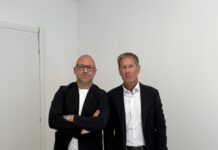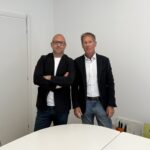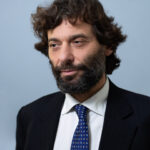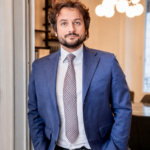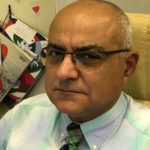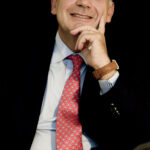


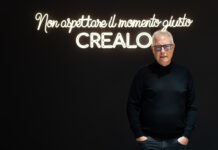


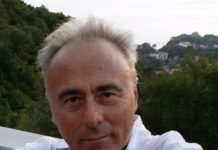
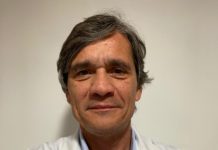




















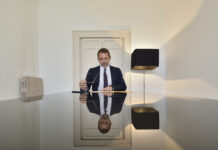
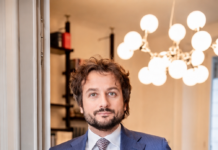
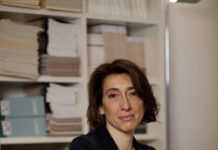

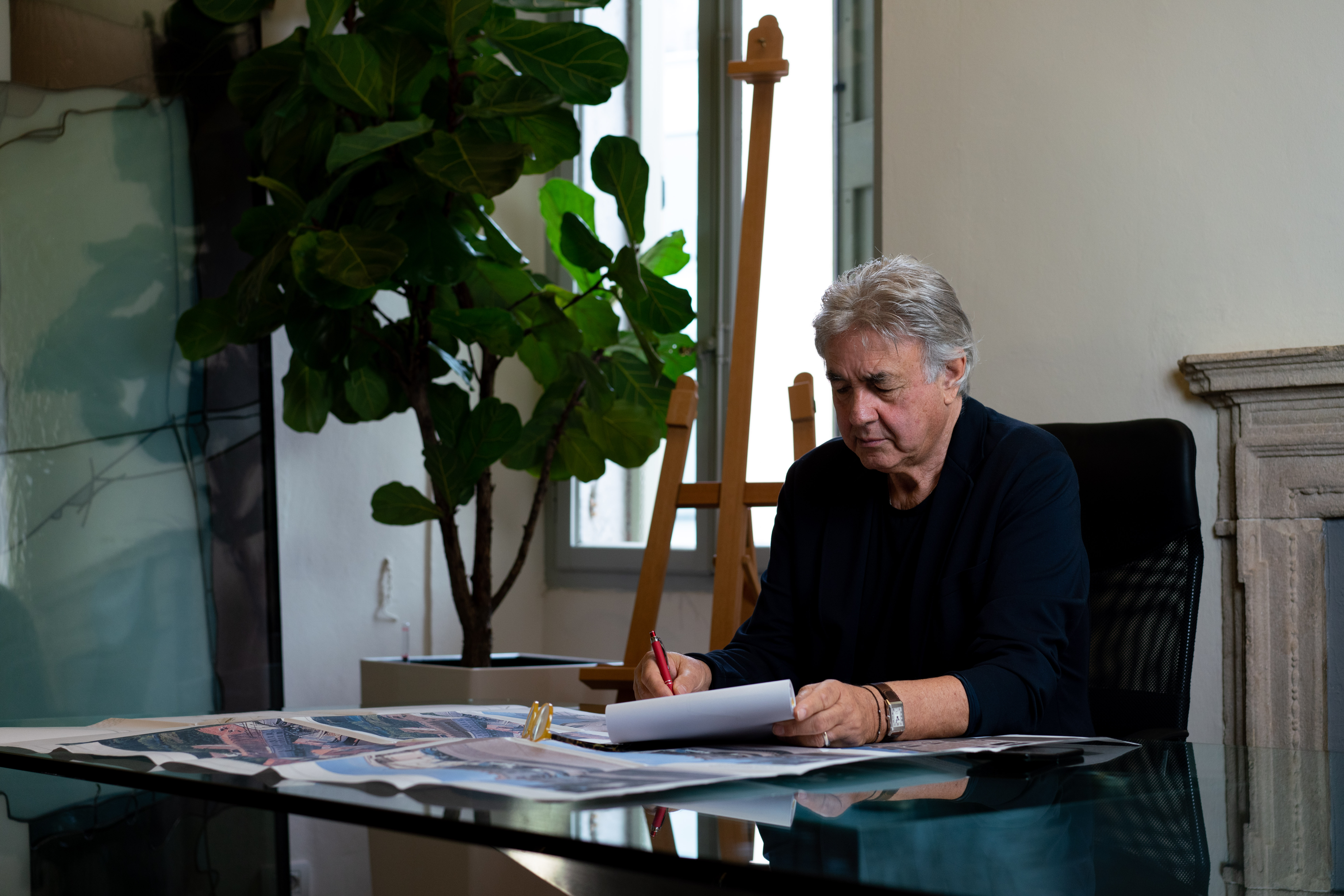
In the vibrant and complex setting of Lake Garda—where history, landscape, and architectural memory coexist—architect Lucio Merlini pursues a professional vision that goes far beyond the simple construction of spaces. His works are places to be lived in, tailor-made for each client, where architecture, interior design, and painting engage in dialogue to create unique experiences. He is a figure who combines design precision, artistic sensitivity, and deep respect for the history of places. Alongside him, in a process of expanding image and communication, is Nicoletta Vitale, a professional active in the private television sector, who for years has helped open new expressive and relational channels toward the public.
by Roberta Imbimbo
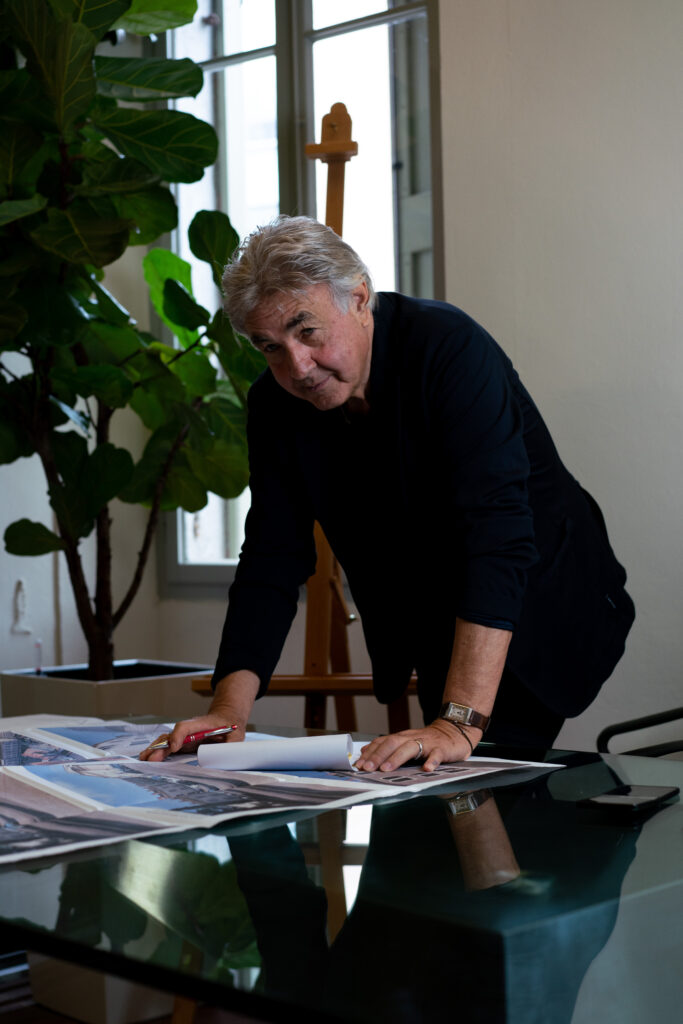
Architect Merlini, your professional image is increasingly associated with the concept of bespoke architecture. What does this mean to you?
It means starting from the person—their way of moving, thinking, and living. I’m not interested in creating standardized environments; I want each individual to be able to recognize themselves in the space they will inhabit. That’s why I intertwine functional requirements, architectural criteria, and the client’s identity. Architecture must be sartorial, tailored to the person who will live in it. Every project is born from a carefully calibrated balance between form, function, behavior, and desire. It’s a complex process that requires analysis, listening, and a deep understanding of the individual, combining advanced techniques with aesthetic sensitivity. For me, architecture, interior design, and painting are not separate fields but a single design language. Interior design extends architecture; painting becomes its voice. Surfaces converse with furnishings, colors shape volumes, and painting defines atmospheres and perceptual hierarchies. The result must be harmonious and immersive. The goal is to create environments that are not merely inhabited, but that generate a complete life experience—physical, psychological, and cultural.
How does culture enter into your projects?
Culture means awareness of the past and responsibility toward the present. Working on Lake Garda means operating in places steeped in history: medieval complexes, Venetian architecture, Austrian structures. Bringing life back to these historic buildings means reinterpreting them with respect, never betraying their essence. My priority is to create architecture that is contemporary in function but coherent in memory—architecture that does not impose itself, but integrates naturally, restoring a balance between past and present. Culture gives depth, roots, and truth to places. Without culture, a project is just a form devoid of meaning.
You are currently involved in very demanding projects linked to the public sector and to tourism and hospitality. Can you tell us more?
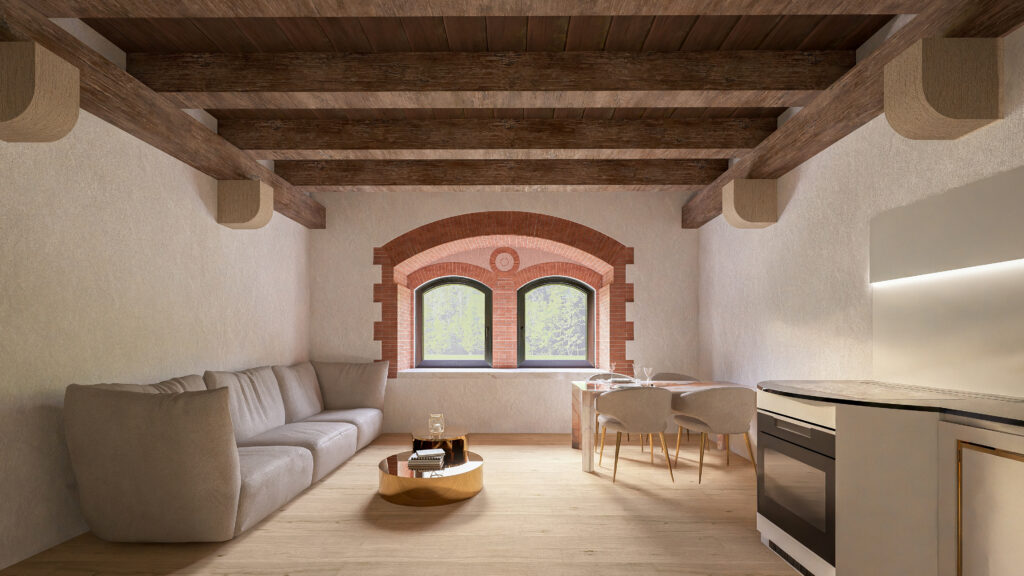
We are working on highly significant commissions, many of them connected to the public sector and to high-end tourism: luxury hotels, SPAs, wellness centers, restaurants, bars, and entertainment venues integrated within historic buildings. Some former Austrian-era barracks, for example, have been converted into five-star luxury hospitality facilities, with outdoor spaces completely reimagined and organically connected to the original architectural system. Similarly, Venetian buildings and medieval-derived properties have been transformed into high-value residences, while maintaining a strong bond with the Lake Garda territory—a place where architecture must constantly engage with the dominant presence of the natural landscape, with history embedded in materials, and with environmental balance. For private investors, we develop customized solutions, often unique in their kind, capable of combining technology, design, and strong emotional impact. Our focus is on creating environments that merge with the landscape, respecting nature and existing structures. Bright, evocative spaces that generate well-being and deep relaxation.
Behind this vision there is clearly a great deal of on-site work.
Absolutely. Nothing can be achieved without a strong presence on site. I personally oversee craftsmen, suppliers, and construction processes. Managing the work “360 degrees” means transforming the idea into reality with coherence, precision, and fidelity. It is on site that a project proves its solidity.
In recent years you have also been focusing on image and communication. How important is this for an architecture firm?
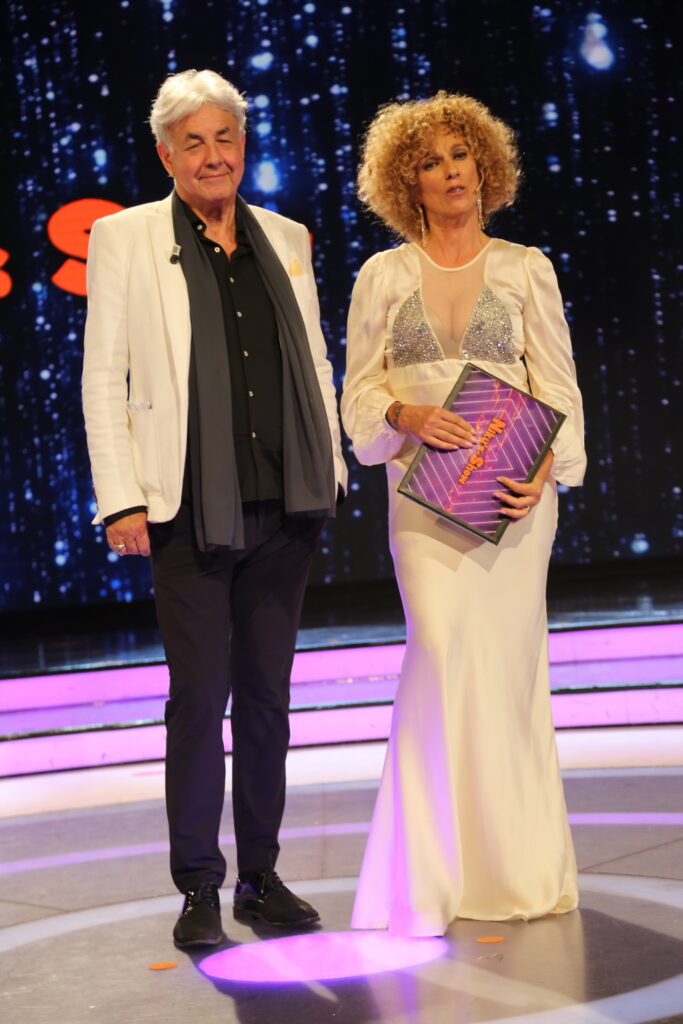
It’s very important, because today communication is part of the project. Thanks to Nicoletta Vitale, who works in television programming, we are expanding our channels of dialogue with the outside world. It’s not just promotion; it’s about sharing a vision—a way of helping people understand that architecture is not only technique, but also culture, emotion, and identity.
If you had to summarize your vision in one sentence?
I design spaces that are not merely inhabited, but lived. Places that speak to people, welcome them, move them, and make them feel good. At a time when architecture risks becoming a purely technical exercise or a replicable language, I deeply believe in the need for an approach that restores meaning, depth, and identity to places. Every environment becomes a cultural, emotional, and perceptual device, capable of generating well-being and leaving a trace. This is, today, the value of my signature: the technical and artistic ability to transform space into life.