











































The intertwining of geopolitics, technological innovation, and new economies such as the space economy and the defence economy is reshaping the maps of global competition. Today, economic warfare between states is fought more with algorithms, satellites, chips, and patents than with conventional weapons.
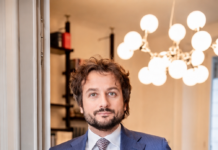
In this scenario, finance too is being called to undergo a profound evolution: it must become smarter, capable of supporting innovation and looking beyond immediate returns. Guiding us through this analysis is Andrea Di Bari, founder of Legalis Business Consulting, a firm specializing in executive and strategic consulting, Mergers & Acquisitions (M&A), and strategic finance. For years, he has worked at the intersection of universities, incubators, and industry, with the aim of transforming research into business by building concrete bridges between capital, research, and innovation. We spoke with him about the new international economic balance, the growing role of the defence economy, and the need for Italy to act as a team—bringing together finance, institutions, and companies—to remain competitive in an increasingly connected and fast-moving world.
by Roberta Imbimbo

Dr. Di Bari, in recent months there has been increasing discussion of “new economies” such as the space economy and the defence economy. How real are these frontiers of new industrial development?
Much more real than one might think. The defence economy, in particular, is one of the fastest-growing areas. The increase in public spending on defence in many European countries does not have only a military value: it generates a complex economic supply chain made up of technologies, research, advanced materials, software, and applications that then spill over into civilian life as well. It is a frontier that can drive industrial and technological growth over the coming years.
You often refer to “dual-use” technologies. What role can they play in industrial renewal?
A strategic role. We are talking about technologies developed in the military sphere that also find civilian applications, producing benefits for society as a whole. Think of pharmaceutical research, materials for protection against viruses or radiation, secure communication systems: all examples of “dual-use” innovation. Italy has scientific and academic excellence of the highest level, but it often struggles to bring research results to market. That is why I believe finance can become a bridge between universities, research, and industry.
Another major challenge you often mention is industrial reconversion. In which direction could this process evolve?
Industrial reconversion will be crucial in the coming years, especially for complex sectors such as automotive, which may find new opportunities in the space economy and the defence economy. In this context, I am carrying out intense scouting and technological synthesis activities: we identify solutions with an already advanced level of technological maturity (high TRL) or with great yet unexpressed potential, and we help them find an economic framework and an appropriate managerial and financial structure. The goal is to bring them quickly to market, making them attractive to investors and industrial players. This is a way to enhance university research, often penalized by difficulties in accessing the market, and to transform pure innovation into concrete enterprise.
How can finance contribute to this transition?
By becoming more “intelligent.” To do so, investments must be oriented not only toward immediate profit, but toward technologies that, in the medium to long term, guarantee strategic returns. Today we need finance that can read the future, that can support projects with longer time horizons, even if their economic return is slower. Ultimately, these are the investments that create a true competitive advantage for the country.
You often speak about the need to “act as a team” among institutions, companies, and finance. Is this still difficult in Italy?
Yes, but it is not impossible. I live in Malta, which offers a privileged observation point as it is a system devoted to international finance, and from here Italy is perceived as one of the countries with the greatest potential. Italy has an extraordinary industrial fabric, but it is often fragmented, and burdened by bureaucracy that slows decision-making processes. We must learn to “make the system work” in the fullest sense: a country system means creating stable links among the skills present in different spheres—finance, industry, legislation, and academia—and bringing them together around shared goals of growth and technological autonomy. We need common governance capable of directing public and private resources toward strategic supply chains, fostering public-private partnerships and integrated innovation projects. In this way, even small and medium-sized enterprises could more easily access capital, knowledge, and technologies that today are reserved for large groups. It is not just about “collaborating,” but about coordinating interests within a logic of national competitiveness. Acting as a team today means aligning finance, industrial policy, and research toward a goal of autonomy and strategic positioning of the country in the international context.
What concrete contribution can a financial boutique like Legalis Business Consulting make in this scenario?
Legalis Business Consulting acts as a bridge between innovation and capital. Our role is to identify promising technologies in the academic and research world, structure them economically and managerially, and make them immediately attractive to the capital markets. We work side by side with young entrepreneurs in incubators and universities, helping them transform their ideas into concrete businesses. We provide them with a clear and timely reading of the context, enabling them to make strategic decisions at the right moment: this is the core of my mission and of competitive intelligence.
Ultimately, what is the long-term vision?
After the era of disruptive technologies, the new challenge will be to make them sustainable and accessible. If finance, industry, and institutions truly succeed in acting as a team, Italy will be able to transform its technological potential into a real lever of economic power.