



































The civil engineering activity of Engineer Oswald Holzner began in 1994 in Lana as a firm specializing in structural and geotechnical design, immediately standing out for its rigorous approach and its constant pursuit of cutting-edge technological solutions. In 2010, Engineer Claudio Bertagnolli joined the project, marking the start of a phase of growth and transformation that would lead to the creation of today’s HB – Holzner & Bertagnolli Engineering. Between 2023 and 2024, Engineers Hannes Huber and Marco Righi also joined the company’s partnership, further expanding the group’s expertise and strategic vision. Today, HB operates not only in Italy—with its headquarters in Lana and branches in Milan, Trento, Modena, and Gioia Tauro—but also in Germany, in Munich and Freiburg, where it is active through its subsidiary Göppert-HB. This growth reflects the firm’s ability to combine technical excellence, digital innovation, and an international outlook.
by Roberta Imbimbo
Engineer Righi, HB is a reference name in structural and geotechnical design. How has the company evolved over these thirty years of activity?
The current HB has its roots in 1994, when Engineer Oswald Holzner launched a civil engineering practice in Lana focused on structural and geotechnical design. With the entry of Engineer Claudio Bertagnolli in 2010, the firm consolidated and took on its current name, entering a phase of strong growth and organizational structuring. In recent years, with my entry and that of Engineer Hannes Huber, we have embarked on a new path of technological evolution and international expansion, while firmly maintaining the values that define us: expertise, reliability, and quality. Today, HB employs over 80 professionals—including engineers, technicians, and collaborators—and continues to grow at a steady yet sustainable pace, ensuring consistently high standards of excellence, which remain the hallmark of our work.
What are HB’s main areas of activity today?
We are involved in structural and geotechnical design at all levels: from preliminary studies to detailed and construction design, through to site supervision and final testing. We also have a dedicated BIM (Building Information Modelling) department, which integrates design processes in an advanced way using the best software available on the market—Revit, Rhino, Grasshopper, Allplan—allowing us to ensure precision, consistency, and control at every stage of the project. We work with all major structural materials: reinforced concrete (standard, post-tensioned, and pre-tensioned), steel, timber, and innovative fiber-reinforced materials, always seeking the most efficient and sustainable solutions.
What are the main challenges in designing complex structures?
Our goal is to optimize structures while ensuring the effectiveness and safety of complex architectural solutions. We work closely with architects and clients to combine aesthetics, functionality, and sustainability, while meeting timelines and quality standards.
Every project is both a technical and a human challenge: we want our structures to express balance and innovation, and to represent lasting value for the environment and for future generations.
Among HB’s most representative projects is CityWave, currently nearing completion. Can you tell us about it?
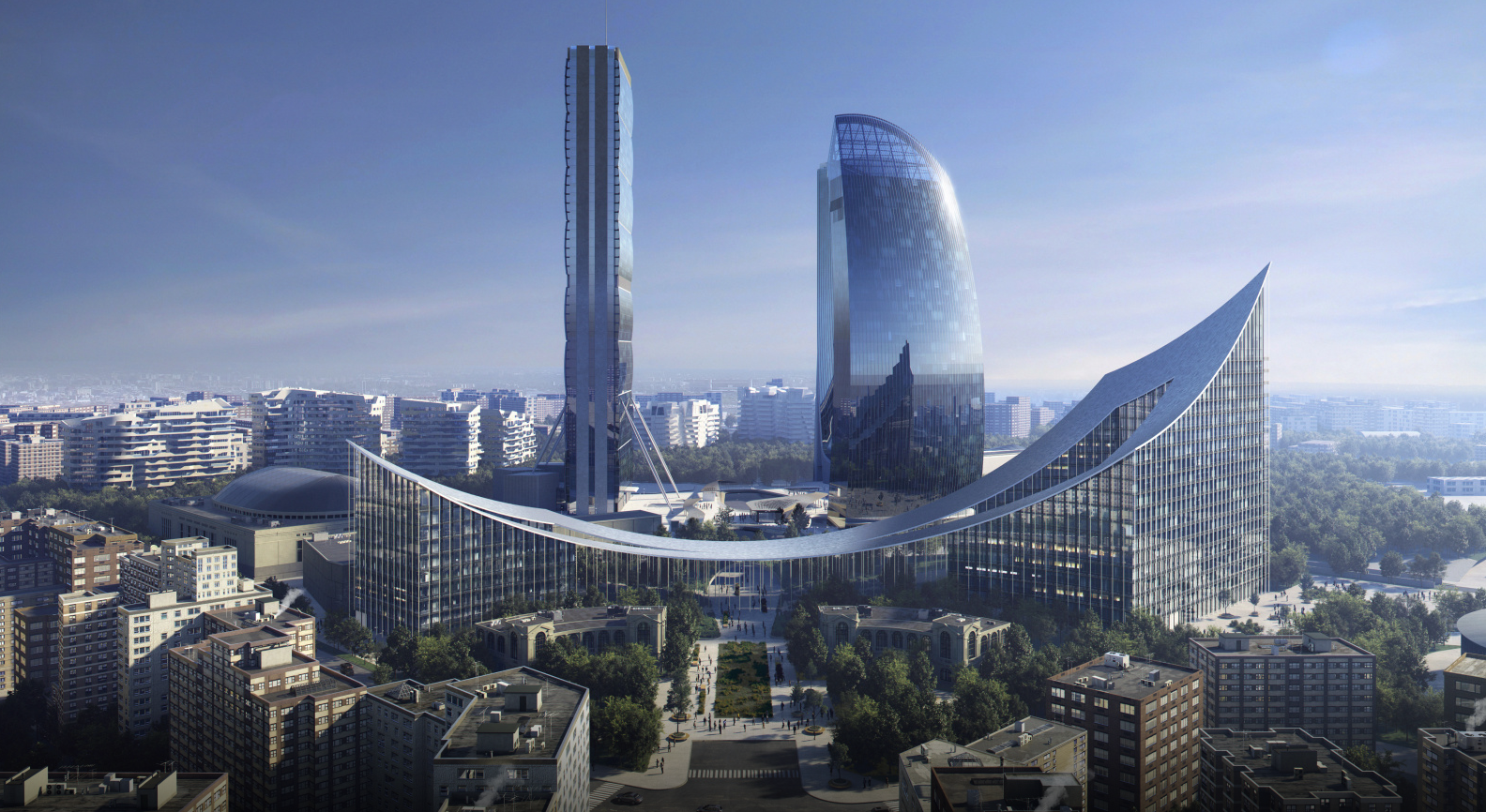
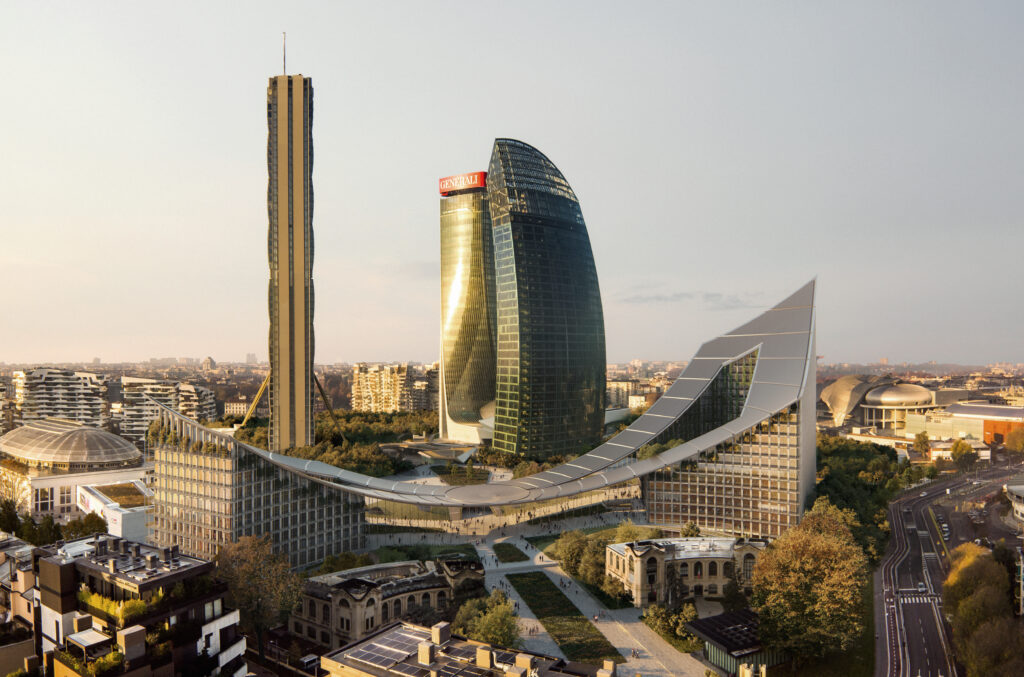
CityWave is undoubtedly one of the most iconic and ambitious projects we are working on at this time. It represents an extraordinary synthesis of visionary architecture and advanced structural engineering. The building, now almost completed, symbolizes our continuous pursuit of innovation and transformation, with the aim of ensuring safety, efficiency, and sustainability. CityWave combines innovative materials and state-of-the-art construction technologies—from high-performance and post-tensioned concrete to engineered timber, innovatively stressed and tested in university laboratories, as well as composite steel solutions. One of the most fascinating elements is the canopy, a suspended structure that combines architectural lightness with engineering robustness. It is built using technology inspired by cable-stayed bridges, based on a system of load-bearing cables supporting a lightweight, high-performance XLAM timber roof. This project encapsulates HB’s philosophy: reconciling aesthetics, functionality, and sustainability through the strength of engineering and constant dialogue with architecture.
HB has grown significantly in recent years. How do you maintain high quality standards in such a dynamic context?
Our strength lies in our people. HB constantly invests in training, planning, professional development, and the well-being of its collaborators, because we believe that the quality of a project begins with the quality of teamwork. Our offices are characterized by open, bright, and stimulating environments, where each professional can best express their skills and contribute to the firm’s evolution. Our growth has always been gradual and sustainable, allowing us to preserve the high level of technical excellence and attention to detail that has distinguished us for thirty years.
What are HB’s next objectives?
We are pursuing a process of internationalization and sectoral expansion—always within the structural and geotechnical field—which is leading us to become increasingly present in strategic European markets, starting with Germany. The goal is to broaden our scope while preserving our DNA: high technical quality, engineering precision, and the ability to engage with the complexity of contemporary architecture. We want to continue growing, yes, but without losing our identity—that of a firm that combines tradition, innovation, and a passion for engineering. HB will continue to build the future of structures with the same solidity with which it has built its own history: step by step, person by person.