











































Family businesses form the backbone of Italy’s productive fabric: they account for approximately 85% of all national enterprises and generate around 70% of GDP, confirming their role as the beating heart of the country’s economic system. However, their longevity can never be taken for granted. In markets shaped by technological transformation, rapid socio-economic change, and growing competitive complexity, the real challenge is reconciling continuity with innovation.
We discussed this with Professor Salvatore Tomaselli, one of Italy’s leading experts in family business strategy, who emphasizes that two key concepts — holistic vision and strategic “cross-eyed” focus — are now indispensable governance tools.
By Roberta Imbimbo
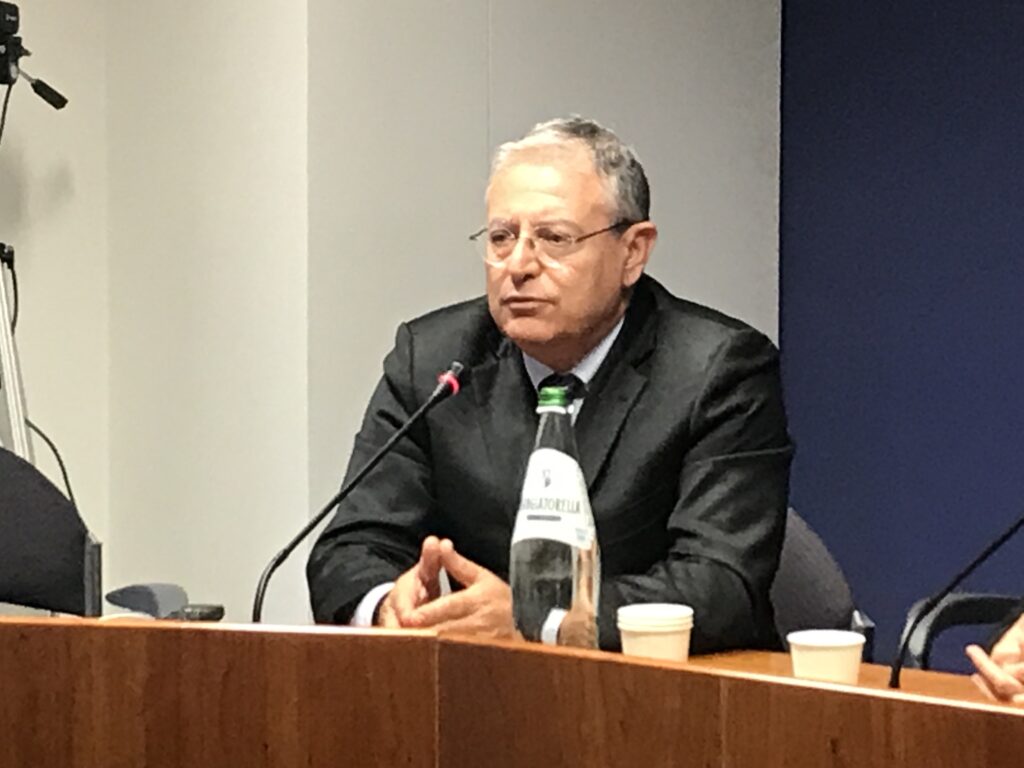
Professor Tomaselli, what does “holistic vision” mean in a family business?
To make effective and sustainable decisions, an entrepreneur must develop a holistic vision — that is, the ability to view the company as an integrated system in which every component is interconnected and contributes to overall success. This approach requires looking beyond mere managerial and financial dimensions: the life of the business is deeply intertwined with that of the family that leads it.
Internal relational dynamics, even when the family appears distant from day-to-day management, inevitably influence organizational culture and strategic choices. Likewise, business decisions affect the quality of family relationships and the family’s ability to interact constructively with the enterprise. Modern governance therefore cannot ignore the interdependence between family and business.
From this perspective emerges the concept of “family citizenship,” which defines harmony and cohesion within the family unit as essential conditions for the proper functioning of the entrepreneurial structure. Managing a family business with systemic thinking means fostering trust and transparency — indispensable elements for ensuring the strength of relationships and the longevity of the shared project. Family cohesion is the first pillar of corporate solidity; without it, no governance model can endure over time.
How does holistic vision translate into operational choices and everyday behavior?
By organizing information, sharing it openly, and ensuring that all members of both the family and the business operate with the same frame of reference. When data and decisions lack transparency, conflicts and misunderstandings easily arise. Addressing uncomfortable issues may be difficult, but failing to do so carries an even greater risk: the inability to build lasting relationships.
Holistic vision therefore encourages not only sound business management, but also the cultivation of family relationships, the consolidation of coexistence among shareholders, and the development of mutual trust. This is the essential condition for both the company and the family to grow together.
What is the relationship between this vision and “strategic cross-eyed focus”?
Strategic “cross-eyed” focus is the natural complement to holistic vision: it means looking simultaneously at the short and the long term, managing daily urgencies without abandoning long-term planning.
Beyond enabling businesses to anticipate trends and prevent crises, this approach also applies to family dynamics. When shareholders lose interest or wish to exit, the absence of solutions can turn ownership stakes into real “shareholding prisons,” generating tension.
Forward-looking governance provides practical tools — family agreements, buyout mechanisms, dedicated equity reserves, share buy-back options, and clear succession plans — that allow shareholders to exit fairly, prevent conflicts, and safeguard the company’s stability. Only in this way do holistic vision and strategic cross-eyed focus translate into continuity, competitiveness, and harmony: the lens that allows one to see today and tomorrow together.
In conclusion, what is the most important advice you would give to business families facing the challenge of generational transition?
Holistic vision, strategic cross-eyed focus, and systemic thinking are not abstract theories, but concrete governance tools. They require a modern corporate culture capable of integrating business and family into a shared path, grounded in openness and future orientation. Only then does continuity become an opportunity rather than a challenge.
The most valuable legacy is not just the business itself, but an identity and culture capable of evolving. This requires collective reasoning to guide generational transition with foresight, through genuine alignment architectures among the various stakeholders involved. It is the only way to create cohesion, strengthen mutual trust, and ensure the harmonious continuation of an entrepreneurial project that changes form across generations while preserving its original spirit and values.