












































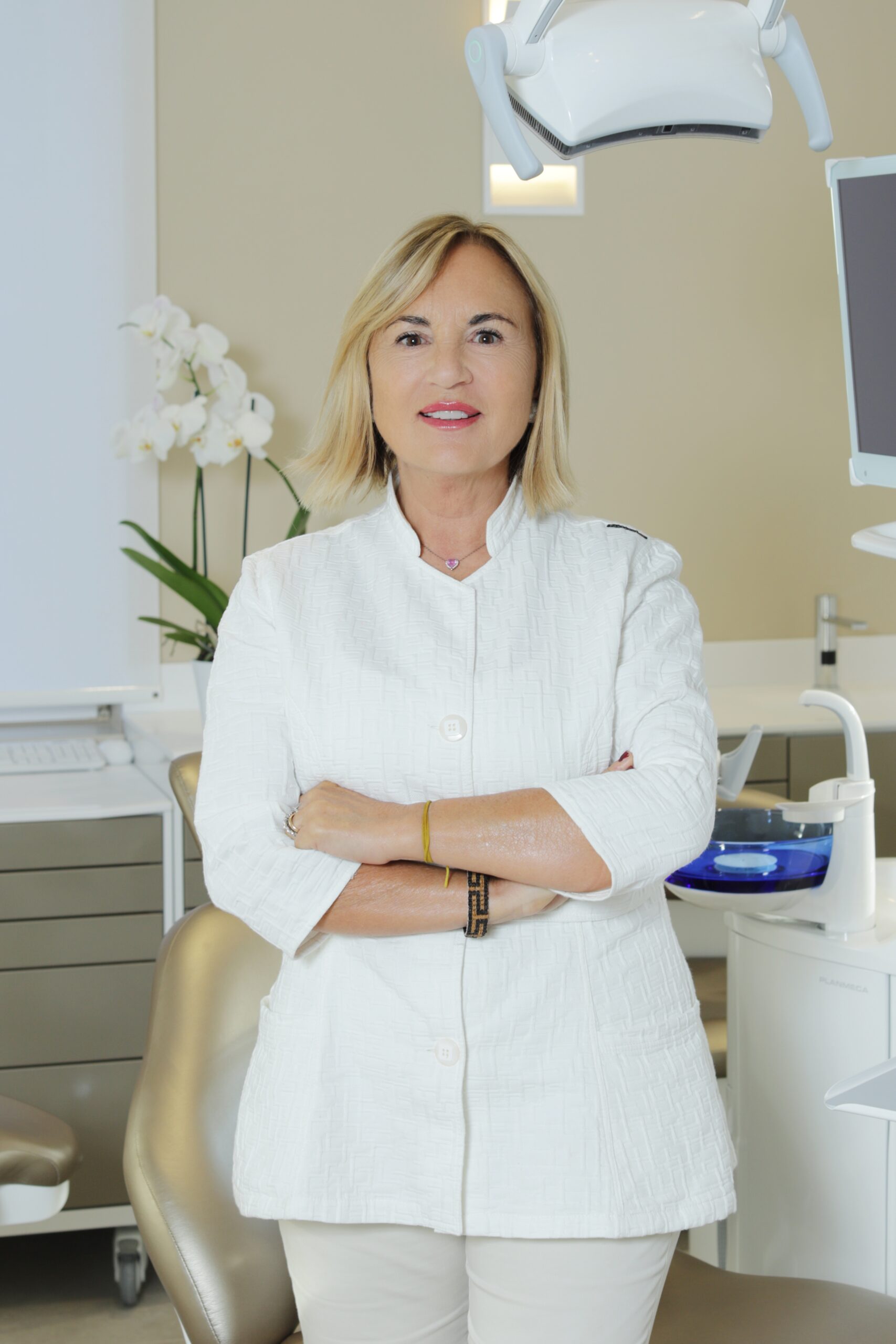
The new trend in aesthetic dentistry is to guarantee an increasingly white and natural smile, in line with the growing attention to facial aesthetics. Describing this evolution is Dr. Annapaola Manfredonia, a dentist at her clinic in Naples, who over the years has observed a steady increase in the demand for treatments aimed at improving the smile. According to Dr. Manfredonia, dental aesthetics has become a priority for patients of all ages and social backgrounds, a sign of a broader cultural transformation. The smile is no longer considered merely an aesthetic detail, but a true tool of everyday communication. In fact, the smile is one of the most powerful forms of non-verbal communication: it conveys trust, openness, and empathy, reduces social distance, and fosters positive relationships. It is often the first thing we notice about a person after their eyes and plays a decisive role in how we perceive others and ourselves.
By Roberta Imbimbo
Doctor, which whitening treatment do you use in your practice?
After years of experience in aesthetic dentistry, I developed a scientific collaboration with the brand “White Over White,” which allowed me to refine a personalized clinical protocol capable of achieving, in less than an hour, significant results in terms of brightness and whitening of the smile, while at the same time minimizing the risks of tooth sensitivity and gum irritation. The procedure—carried out in total comfort for the patient while ensuring high safety standards—is further optimized through the use of specific protective devices, which are a fundamental element of the operating methodology.
How important is customization in whitening?
In my professional experience, I have learned that personalization of the treatment is the key element for achieving optimal results. Every patient who comes to my practice has individual characteristics that significantly influence the response to the whitening treatment. The preliminary clinical evaluation always includes a thorough medical history, during which we analyze the patient’s age, the quality of the enamel, and the initial tooth color. The in-office WoW method is a true guarantee for the patient.
How do you personalize the treatment?
The first step is, as mentioned, a careful patient history. Based on the initial color of the tooth enamel, we assess whether professional whitening can be achieved in a single session or whether it is advisable to extend and enhance the treatment with at-home whitening using a gel and customized trays made specifically for the patient.
Which clinical parameters do you evaluate before performing whitening?
In my practice, I apply a rigorous documentation protocol that includes taking high-resolution photographs of the smile before and after treatment. I use universal shade guides to systematically compare the initial color with the post-treatment result, providing patients with concrete evidence of the improvement achieved. I also always give patients specific behavioral instructions to follow in the 24 hours after treatment, recommending avoiding pigmented foods and drinks so that the whitening gel can complete its action.
How long do the effects of whitening last?
On average, the effects of the whitening treatment last about one to one and a half years, but this can vary depending on the patient’s daily oral hygiene habits and excessive consumption of coffee, tea, or cigarettes. To prolong the so-called “super white” effect, I recommend using the White Over White toothpaste and mouthwash.
In which cases is whitening treatment not recommended?
It is not recommended when the patient has white fluorosis stains on the teeth or dark stains due to the intake of certain antibiotics during childhood that interfered with enamel formation. It is also not recommended in the presence of enamel fractures caused by previous trauma. It is absolutely contraindicated during pregnancy or breastfeeding.
What is the difference between whitening and veneers?
They are two different methods. With whitening, we can only achieve a very white smile. However, if in addition to tooth color one also wants to improve the shape, size of the teeth, or close diastemas, then it is necessary to use ceramic veneers.
Do veneers require filing the teeth?
In my practice, I use ultra-thin ceramic veneers, similar to contact lenses, which allow for application without the need to file the patient’s teeth at all. This technique ensures optimal chemical adhesion between enamel and ceramic, drastically reducing the risk of detachment.
Is this a definitive treatment?
The application of ceramic veneers can be considered a “definitive” treatment, since they do not need to be replaced over time and they never change their white color. However, it is important to have check-ups every six months at the clinic, combined with professional hygiene sessions, and to maintain meticulous daily oral care by brushing three times a day and using dental floss frequently and correctly to remove residual plaque. Finally, it should be considered a reversible aesthetic procedure, because with a laser it is possible, in a short time, to remove the applied veneers, and the underlying teeth will be intact, without having undergone any alteration over time.
What does the smile design project involve?
Each smile is carefully planned through the creation of a preliminary mock-up, which allows patients to preview and realistically evaluate the final aesthetic result. At this stage, shapes, dimensions, and color tones are carefully studied in relation to each patient’s individual facial characteristics. An impression of this simulation is taken and sent to the laboratory to faithfully reproduce the smile design. No two smiles leaving my practice are ever the same: each result is unique and personalized.
To what extent do these aesthetic dentistry treatments affect self-esteem?
Numerous studies in psychology show that the perception and belief of having a beautiful smile reduces social anxiety and, consequently, increases the willingness to smile and speak in public without embarrassment, or to laugh without covering one’s mouth, or to feel more general feelings of shame. A white, bright smile improves self-esteem by increasing self-confidence and also has a strong impact on social relationships with others.