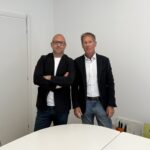

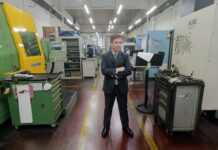



































In an increasingly competitive and complex manufacturing landscape, competitive advantage is no longer determined solely by technology and automation, but also by organizational strength, sound governance, and the ability to develop internal talent. After twenty years of steady growth, Nova Tek, a company specializing in the subcontract manufacturing of sheet metal components, has entered a new phase in its industrial journey. Since July 2025, the company has become a joint-stock company (S.p.A.), adopted a Code of Ethics, and, for the fourth consecutive year, received the highest commercial reliability rating—an achievement reserved for a select group of Italian companies. This milestone marks the beginning of a new phase focused on long-term structural consolidation and sustainable growth. We discussed this evolution with Serena Marignoni, Commercial Director of Nova Tek, the company founded in 2004 in Casaloldo (Mantua) by William, Dante and Fabio Zambelli, which is currently undergoing a significant organizational strengthening.
By Roberta Imbimbo

Ms. Marignoni, what does Nova Tek’s transformation into a joint-stock company (S.p.A.) in July 2025 represent for the business?
The transformation into an S.p.A. is the natural evolution of our journey. It is much more than a legal change; it represents a cultural and organizational leap forward. Becoming a joint-stock company means embracing a more structured governance model, increasingly formalized decision-making processes, and a long-term vision focused on solidity and transparency. This transition strengthens our credibility in the marketplace and reinforces the confidence of customers, suppliers, and financial partners.
At the end of last year, Nova Tek adopted a Code of Ethics. Why was this an important step?
Because growth also means taking on greater responsibilities. Our Code of Ethics formalizes values that have been part of Nova Tek’s DNA since the very beginning: integrity, transparency, respect for people, and reliability in business relationships. Today, with a larger organization and rapidly growing revenues, it became essential to establish tools capable of ensuring internal consistency and external transparency. Governance has become just as much a competitive asset as technology.
Nova Tek has received the highest commercial reliability rating for the fourth consecutive year, an achievement reserved for only a very small percentage of Italian companies. How important is this recognition to your strategy?
It is extremely important. Maintaining the highest level of commercial reliability for four consecutive years demonstrates consistent financial strength, punctuality in payments, and sound management practices. In our industry, where projects are often complex and high-value, reliability is a true strategic asset.
Nova Tek has expanded both its offices and production facilities. What value does this investment bring to the organization?
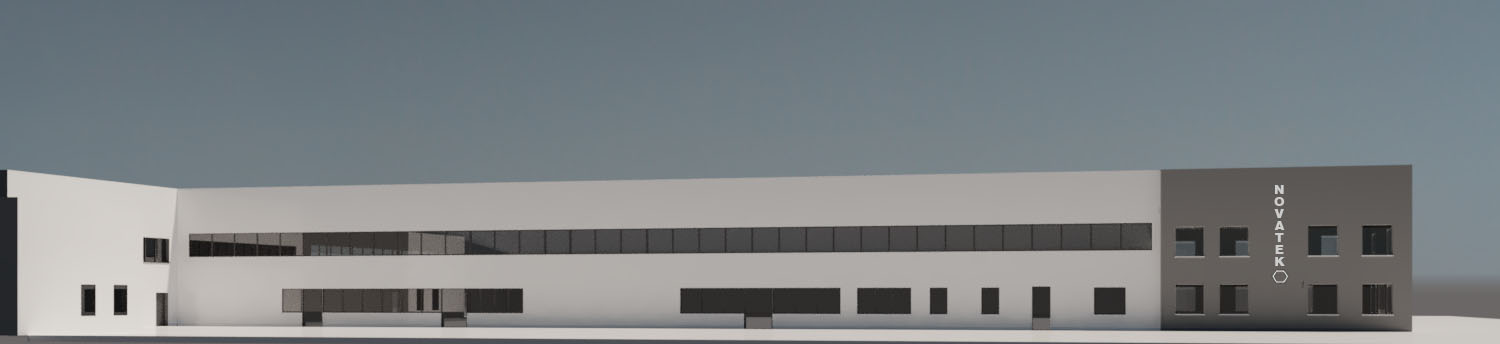
It represents a significant advantage. Expanding our production area allows us to support increasing volumes while maintaining our quality standards. The new offices, on the other hand, are an investment in the quality of everyday work: more functional spaces, stronger integration between departments, and improved internal communication. It is not simply an aesthetic or logistical upgrade—it is an organizational choice.
Over the past few years, Nova Tek has invested heavily in machinery and automation. This year, however, priorities seem to have shifted.
Exactly. In recent years we focused extensively on technological innovation, continuously upgrading our production equipment. That was a necessary step. Today, in a context of significant revenue growth, we have realized that the real competitive differentiator is no longer just the machine itself, but the people who operate it, coordinate it, and integrate it into the production process. That is why, in 2026, our strategic priority is the development of human capital.
How does this renewed focus on people translate into concrete actions?
First and foremost, through structured training. We are not talking only about technical skills, but about broader professional development: organizational capabilities, priority management, cross-department collaboration, and a results-oriented culture. We are also working extensively on clearly defining roles and responsibilities. During periods of rapid expansion, there is always a risk that functions overlap or that growth outpaces organizational structure. For this reason, we are introducing greater formalization of decision-making processes and operational workflows. We have learned that sustainable growth requires a more structured organization, with clearly defined reporting lines and an efficient decision-making chain.
You have also chosen to work with an external consulting firm to reorganize your internal management. Why?
Because rapid growth inevitably brings greater complexity. We decided to engage a specialized consultancy to conduct an objective assessment of our organization, optimize the management of internal resources, and redefine processes and responsibilities. Our goal is clear: to build an organizational structure that matches our new business scale, avoiding inefficiencies while ensuring operational continuity.
Ms. Marignoni, what is Nova Tek S.p.A.’s greatest challenge today?
Our greatest challenge is managing growth. Expanding is an achievement; building a strong organization is a responsibility. Today our commitment is to consolidate increasing production volumes through a solid organizational structure, clear processes, and skills that match the complexity we have reached. In a market where many competitors have access to similar technologies, the real difference lies in the quality of the internal organization. We have invested to grow. Now we are investing to ensure that growth remains stable, sustainable, and long-lasting.