







































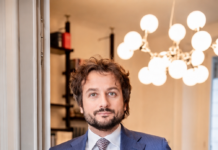





At a time when public administration is increasingly called upon to demonstrate transparency and expertise, Studio Legale Marotta stands as a model of balance between tradition and innovation. Founded in 1991 by lawyer Pasquale Marotta, the firm continues its journey today with the entry of his son Pietro, marking a generational transition defined by continuity and renewal. We met with both professionals to explore the philosophy and evolution of a practice that, from the heart of Caserta, continues to interpret the role of administrative law with authority and vision.
by Roberta Imbimbo

Avv. Pasquale Marotta, how did Studio Legale Marotta come into being and what vision has guided it over the years?
The firm was founded in 1991 with the aim of providing citizens and businesses with a reliable point of reference in the complex field of administrative law. From the very beginning, I have believed in a profession grounded in technical rigor, ethics and dedication to the client. Our philosophy is simple: translating legal rules into concrete solutions, restoring balance and legality to the relationship between public authorities and citizens.
Today the firm is a family practice. What does it mean to share the profession with your son Pietro?
It means ensuring continuity for a project built with commitment and passion. Pietro’s entry has brought fresh energy and a more attentive approach to the regulatory and technological transformations that are reshaping the legal profession. The daily dialogue between experience and innovation is our true strength: two different perspectives, united by the same values of integrity and professional excellence.
Avv. Pietro Marotta, what is your contribution to the firm and how does it integrate with the family tradition?
My goal is to bring a contemporary perspective, more focused on digitalization and the challenges of modern public law. Today, an administrative lawyer must combine legal expertise with the ability to understand economic, environmental and technological processes.
The ongoing exchange with my father allows me to grow professionally while remaining firmly anchored to tradition and professional ethics.
What are the firm’s main areas of practice?
We handle administrative law in its broadest sense: public procurement and tender procedures, construction and urban planning law, education and healthcare law, public administration liability, and public competitions. In recent years, we have also expanded into energy and environmental matters, which are increasingly relevant in relations between private operators and public bodies. A particularly important area involves PNRR procedures, where we assist local authorities in ensuring transparency, compliance and the timely implementation of projects.
Over the years, the firm has achieved significant results. Which victories stand out the most?
We successfully defended a municipal executive who was a victim of workplace harassment, obtaining a landmark ruling of significant jurisprudential value. We have also secured the readmission of economic operators excluded from public tenders, protected healthcare facilities in expansion rights cases, and assisted local authorities in delicate mediation procedures with major energy companies. Each successful case represents not only a professional achievement, but also a sign of trust and closeness to our clients.
How is the role of the administrative lawyer changing today?
Today, the administrative lawyer is called upon to be not only a courtroom advocate, but also a strategic advisor to public administrations. The complexity of regulations, digital transformation and new transparency requirements demand interdisciplinary skills.
It is essential to be able to communicate with public authorities, businesses and citizens using a clear, technical yet human language.
Avv. Pasquale Marotta, what are the future prospects for your firm?
We aim to continue growing while remaining faithful to our founding principles: integrity, expertise and respect for the client. We are investing in continuous training and technology to improve case management and deliver increasingly efficient services. Our goal is clear: to be a point of reference for the administrative law of the future, capable of combining tradition and innovation, experience and vision.
One final question: if you had to describe Studio Legale Marotta in three words?
Competence, ethics and continuity. Three words that tell our story, but also define our direction: a profession that evolves while remaining faithful to the values that give it meaning and dignity.
From the heart of Caserta, Studio Legale Marotta continues to demonstrate that administrative law is not merely a technical discipline, but a service to the community — where justice meets competence, passion and continuity.