






































The magnitude 4.4 seismic event that occurred on May 21, 2026, has once again drawn attention to the Campi Flegrei (Phlegraean Fields) and the phenomenon of bradyseism. The earthquake had its epicenter offshore, in the Gulf near Bacoli, at a depth of approximately 3 km, along the marginal zone of the caldera, close to the so-called “resurgent dome”, an area affected by deformation associated with ground uplift. Ground shaking was significantly lower compared to the March 13, 2025 event. The ground continues to rise, indicating that the “unrest” phase—a state of imbalance within the volcanic system—is still ongoing, with non-linear activity characterized by alternating periods of relative seismic calm and more energetic phases. Continuous multi-parameter monitoring by the Vesuvius Observatory has long indicated elevated gas emissions originating from depth.
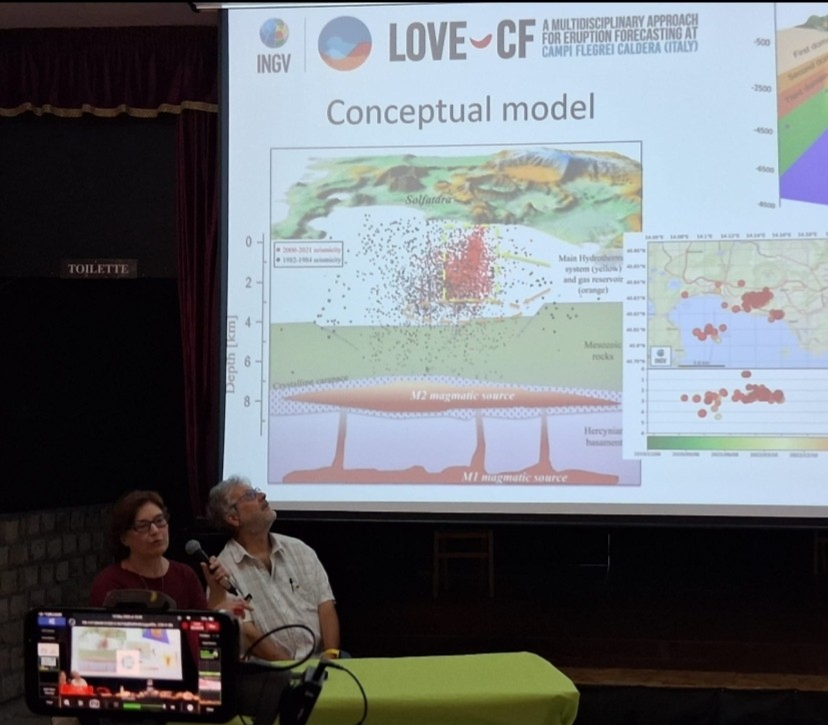
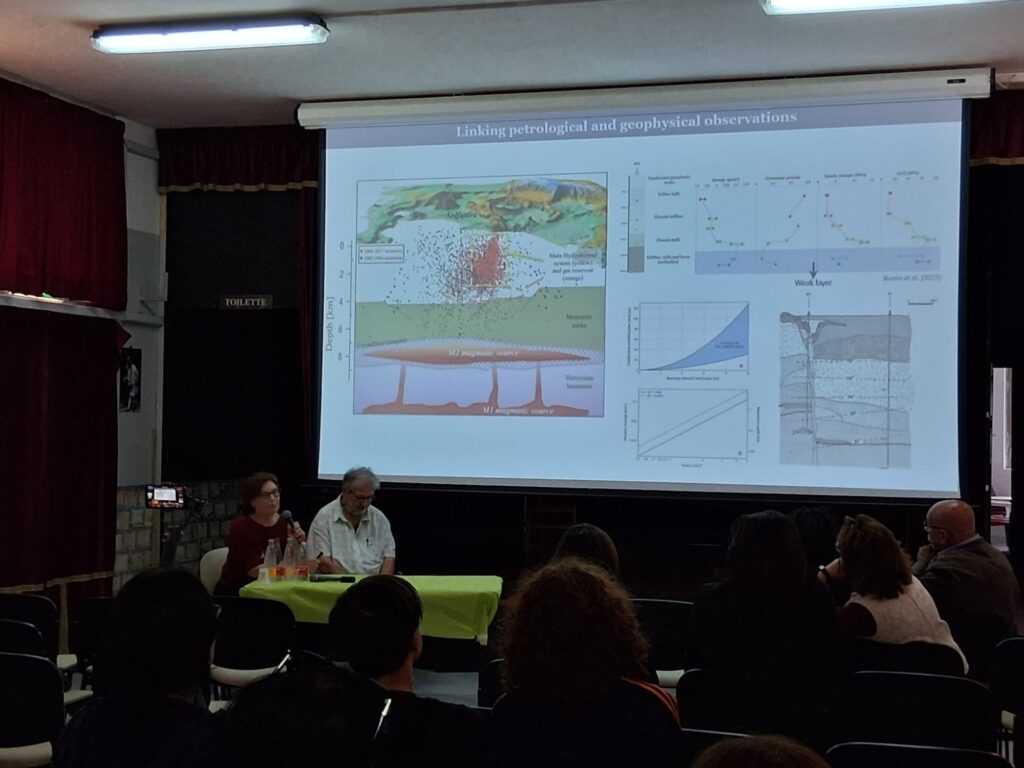
During the bradyseism information meeting held on May 15 in Bacoli, at the Casa della Cultura, promoted by geologist Pierluigi Musto on behalf of the Dialogos APS Association, Dr. Pappalardo, Director of the Vesuvius Observatory, reiterated that such gas fluxes are comparable to those observed in open-conduit volcanoes such as Stromboli. According to current interpretations, gases encounter a low-permeability layer at around 3–4 km depth, which hinders their ascent and contributes to the development of overpressure conditions, ultimately leading to ground uplift. The strongest deformation is observed near the Rione Terra area, with a current uplift rate of approximately 10 mm/month (±3 mm/month), decreasing radially toward the margins of the caldera. This deformation pattern generates shear stress within the shallow crust, favoring the occurrence of earthquakes distributed across multiple seismogenic zones, occasionally releasing significant energy. During the May 15 meeting, Dr. Pappalardo also emphasized that, beyond uplift rate, the shape of deformation is a critical parameter, as any potential magma migration toward the surface would result in noticeable changes in deformation patterns, similar to those observed prior to the Monte Nuovo eruption.
The May 21 seismic event does not currently indicate any significant change in the physical state of the volcanic system, nor any acceleration in ground uplift. The earthquake is part of a seismic swarm, according to Vesuvius Observatory procedures, consisting of approximately 12 events with non-zero magnitude, mostly located in the same area as the main shock, followed by additional very low-energy events. It is important to underline that seismicity is generally associated with ongoing ground uplift, and that further significant energy release events may still occur. The most energetic earthquakes typically occur at depths of around 3 km, with some exceptions. Further detailed updates will be provided in upcoming official bulletins. The Vesuvius Observatory issues special communications only in the event of significant changes in system dynamics. During the May 15 meeting, researcher Dr. Massimo Russo (Vesuvius Observatory) also presented the Sulfur Cave, located along the coastal area of Bacoli, describing it as a geological site of particular interest, featuring minerals typical of the Phlegraean Fields. He also reported that, for a short period in the 1960s, an active hydrothermal bubble was observed inside the cave. The site could represent a resource of scientific and touristic interest, comparable to other geosites in the area.