










































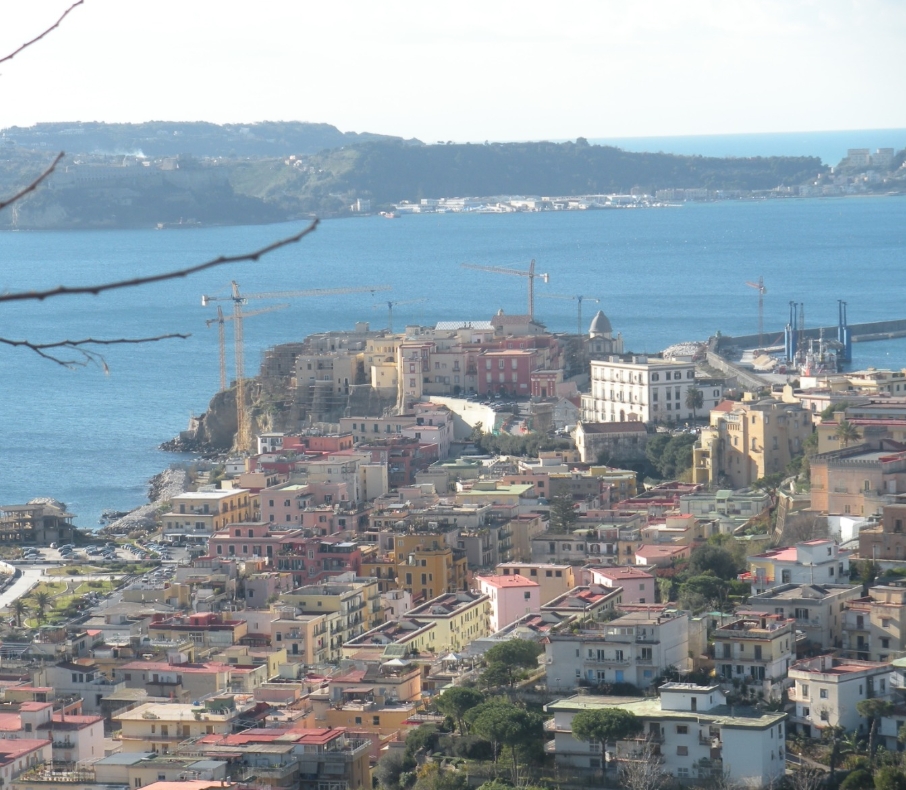
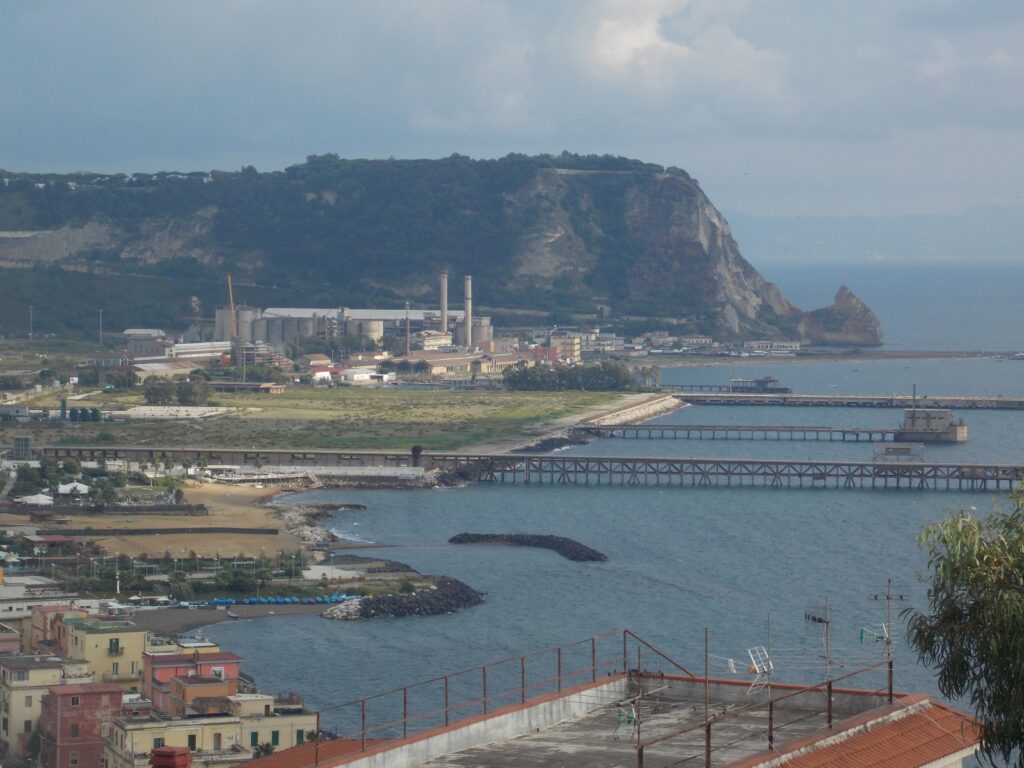
One year after the March 13, 2025 earthquake (duration magnitude 4.6), which struck the Phlegraean area with particularly strong effects in Bagnoli, the system shows less accelerated dynamics, yet is far from exhausted. Ground uplift— which in the weeks preceding the event reached rates on the order of 3 cm per month—has gradually decreased to the current ~10 mm per month, following an intermediate phase ranging between 15 and 25 mm per month in the second half of 2025. The cumulative figure remains significant: about 20 cm over the past year and more than 162 cm since 2005. The deformation maintains a stable geometry, with a maximum at Rione Terra and radial decay toward the edges of the caldera; a behavior suggesting the presence of a largely stationary pressurizing source at shallow depth. At the same time, seismicity has decreased both in frequency and in released energy, consistent with a phase of lower deformation rate. Isolated events remain—such as the magnitude 3.5 earthquake of February 28, 2026—but these are not accompanied by significant variations in the deformation field. Also noteworthy is a local anomaly in the area of the Aeronautical Academy, characterized by a deficit in uplift, currently the subject of scientific study and further investigation. Comparison with the 1982–84 crisis, when uplift reached much higher rates—exceeding 10 cm per month—helps frame the current phase: less intense in deformation rate, yet still significant. Some recent earthquakes have reached slightly higher magnitudes than those recorded during the 1982–84 crisis, with an overall greater release of energy. It is within this dynamic balance that our conversation with Professor Pierluigi Musto, a geologist and expert on the Phlegraean area, takes place.
By Roberta Imbimbo

Prof. Musto, after one year, can we speak of improvement?
We are in a phase of uplift at a reduced rate. This has occurred several times in recent years, sometimes lasting for months, alternating with short periods of higher deformation rates and seismicity. However, the bradyseismic process is still fully active.
Is the stability of the deformation source reassuring?
The fact that the geometry of the deformation remains unchanged over time suggests that the source has not shifted. But caution is needed: geometric stability does not equate to energetic stability. The system continues to accumulate and release energy in a non-linear manner.
How do we explain that today earthquakes are sometimes more energetic than during the 1982–84 crisis?
This is linked to exceeding the maximum deformation levels recorded during that crisis, according to a model described by Professor De Natale (former Director of the Vesuvius Observatory) as early as 2017. When the system surpasses certain thresholds, stress in the rocks increases and, consequently, the likelihood of more frequent and higher-magnitude events rises. This is consistent with recent models describing a non-linear response of the rock medium as deformation increases.
Can we expect new sudden accelerations in uplift?
In the past, rapid changes have occurred—even over just a few days—associated with energetic seismic swarms. Over the past twelve months, we have not observed such dynamics. An interesting aspect is that phases with higher velocity seem to be shorter in duration.
What is the mechanism behind Phlegraean seismicity?
We are dealing with volcano-tectonic seismicity. Differential uplift—maximum in the central area and lower toward the edges—generates shear stress in the rocks. When this exceeds the strength of the medium, fractures occur, and thus earthquakes. It is not magma directly generating the shocks, but the mechanical response of the rocks to deformation. The main seismogenic areas remain well defined: Solfatara–Pisciarelli–Astroni, La Pietra–Bagnoli, Cigliano–Gauro, Lucrino, and the coastal belt between Baia and Bacoli. Hypocenters are generally shallow, within 3 km; only toward Baia–Bacoli can they be slightly deeper, presumably due to a lower geothermal gradient in that area.
In conclusion, what would you like to say to our readers?
The picture that emerges is that of a system that has slowed its pace, but the unrest (imbalance) is still ongoing. The equilibrium observed in recent times is only apparent: geochemistry does not show signs of reversal, and deformation and seismicity continue to modulate the caldera’s internal energy. Beneath Campi Flegrei, the ground continues to breathe—more slowly, and we hope this may be the precursor to a more lasting and effective reversal.