









































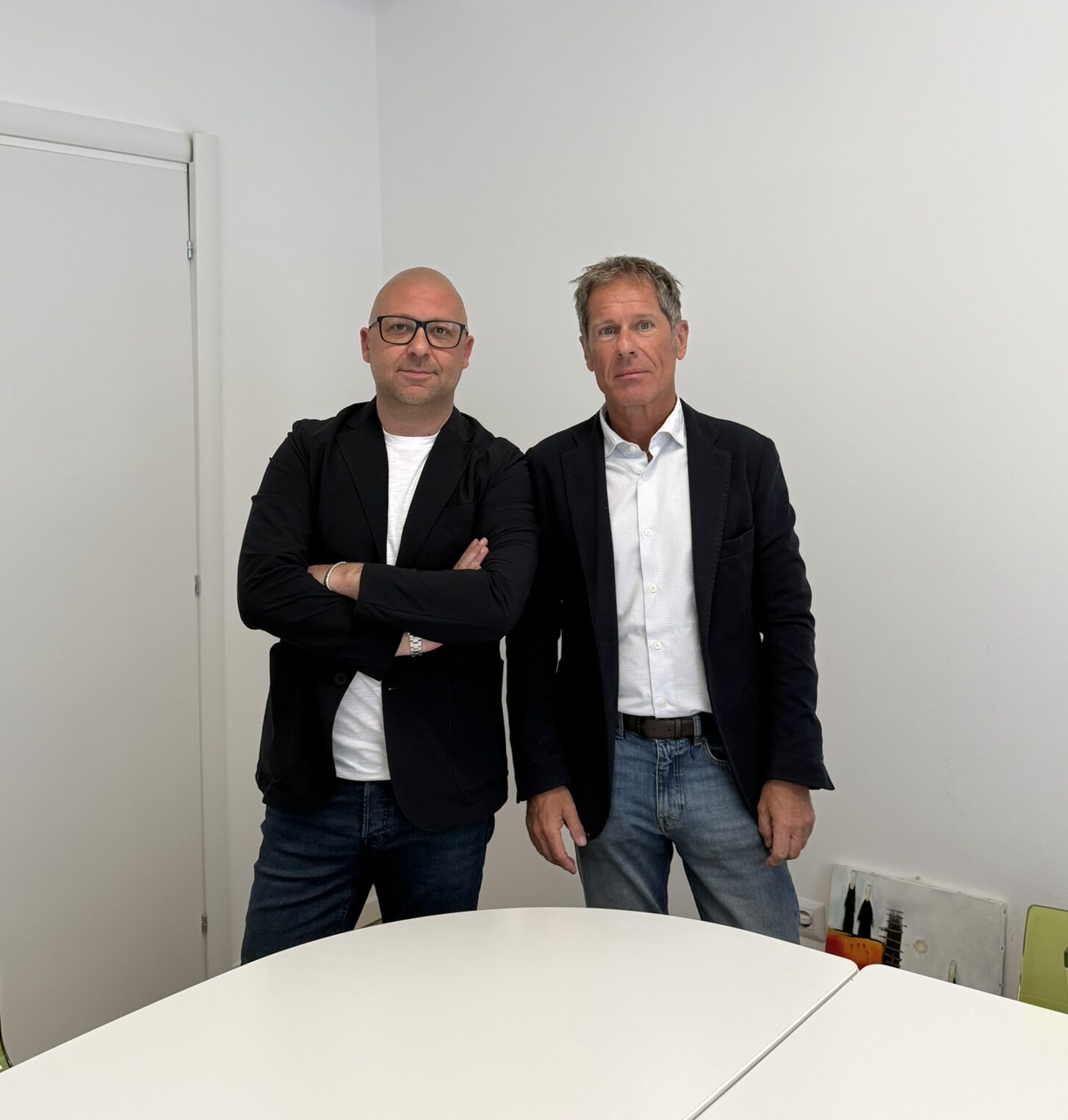
There comes a point in every industrial cycle when change can no longer be managed by inertia. It must be interpreted. Governed. Turned into structure. This is precisely the space in which Ikonix operates. The company was established in October 2024 following Francopost Srl’s acquisition of 100% of the shares in Quadient Italy, the Italian subsidiary of the Paris-based French group Quadient. Beyond its corporate dimension, the transaction marked a far deeper break with the past. It was not simply a change of name, but a redefinition of the business model itself. “This is not merely a rebranding exercise, but a genuine step change,” explain CEO Claudio Schulte and Sales Director Andrea Albanese. “We have combined a solid legacy built on more than fifty years of experience with a more agile, forward-looking vision.”
by Roberta Imbimbo
Mr Schulte, Ikonix is a new name on the market. How did it come about, and what does it represent today?
Ikonix was formally established in October 2024 following the acquisition by our parent company, Francopost Srl, of 100% of the shares in Quadient Italy, part of the Paris-based Quadient Group. But it would be reductive to describe Ikonix as a start-up or simply a new brand. In fact, Ikonix is the culmination of an industrial journey rooted in more than fifty years of experience in the sector. We inherited expertise, know-how, relationships and an established presence in the Italian market, but we have transformed that legacy into something different. This is not a rebranding exercise; it is a paradigm shift. We seized the opportunity created by the acquisition to rethink the company’s operating model: less of a multinational structure, greater decision-making agility, closer relationships with customers and a stronger ability to adapt rapidly to an evolving market. Today, Ikonix embodies this synthesis: a solid yet dynamic company capable of combining continuity with innovation. A business that does not simply operate within a sector, but aims to interpret and shape its evolution.
What is your core business today?
Our core business remains document and communication management, particularly everything related to mail and corporate information flows. We provide hardware and software solutions designed to make the management of both physical and digital communications more efficient. It is an area that is often taken for granted, yet it is crucial to the functioning of any organisation. Every company or public-sector body manages large volumes of documents, communications and shipments on a daily basis. Our role is to optimise these processes, reducing time, costs and the risk of error. The key concept is interconnection: efficiently connecting those who generate a communication with those who receive it. This means integrating systems, automating workflows and ensuring traceability and control. Over the years, this core business has evolved alongside the market. Today, we are no longer talking simply about mail in the traditional sense, but about intelligent communication management, where physical and digital channels coexist and integrate seamlessly.
You serve a very broad market. Who are your main customers?
Our market cuts across multiple sectors because communication is a universal requirement. We work with public administrations, healthcare organisations, the education sector and private companies. In particular, we serve structured organisations managing complex processes, where efficiency and control are strategic priorities. Our strength lies in our ability to tailor solutions: rather than offering a single product, we develop bespoke models for different sectors while maintaining a consistent vision of the entire communication process.
Mr Albanese, over the years you have broadened your offering. What prompted this decision?
Because the way companies manage communication has changed. Today, there are no longer clearly separated silos: document management, print production and logistics are becoming increasingly interconnected. Customers are no longer looking for isolated solutions, but for a partner capable of understanding the entire process and optimising it as a whole. Our starting point remains our traditional core business of Mail Related Solutions, but from there we observed how customer needs were naturally extending into adjacent areas.
The first is Graphics, specifically print finishing: the stage at which content becomes a high-quality physical product, such as a brochure, book or corporate material. This is where precision, productivity and perceived value come into play.
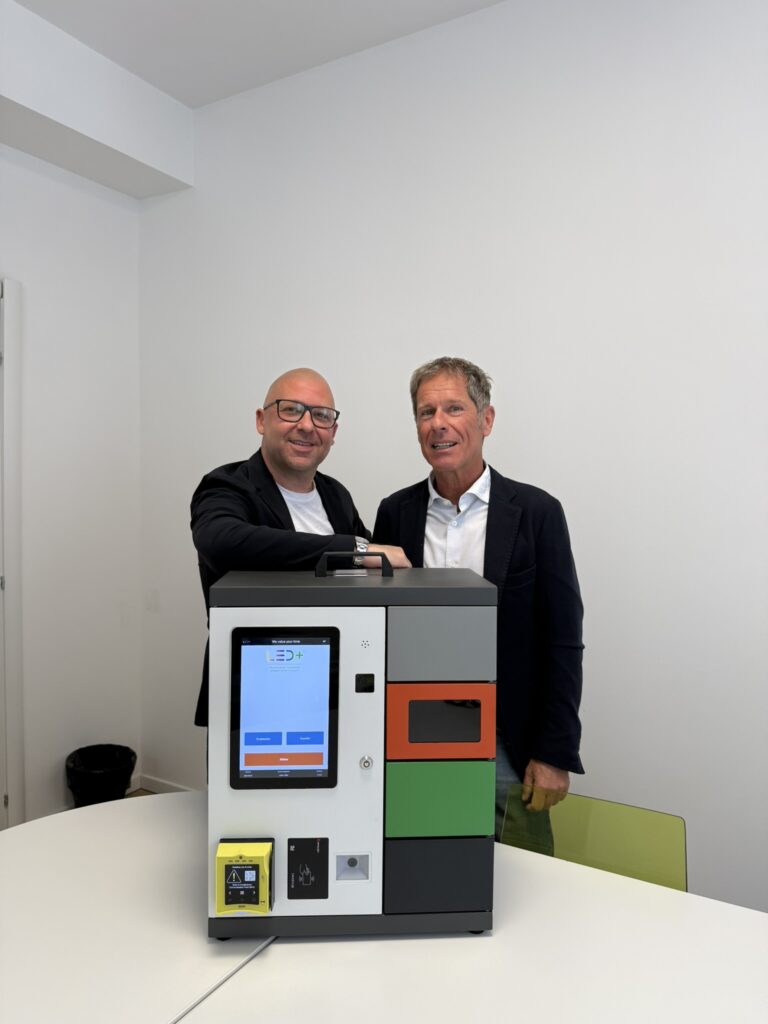
The second is Smart Lockers, which represent a further evolution: moving beyond communication management to managing the physical point of contact between an organisation and its users. These systems make it possible to organise workflows, deliveries and services automatically, improving both efficiency and traceability.
These three areas — document management, print finishing and smart logistics — are not separate segments, but components of a single ecosystem. Our objective is to support customers throughout the entire communication chain, from the generation of a message to its distribution and use. In this sense, broadening our offering is not diversification, but a natural evolution of our role.
What tangible value do these innovations bring to companies?
First and foremost, they deliver operational efficiency: shorter processing times, greater control and fewer errors. But they also introduce a deeper change in the way services are delivered. End users become more autonomous and can access services without being restricted by opening hours. This improves the overall user experience while also simplifying companies’ internal organisation.
Is this already a mature market?
In Italy, it is still developing, but there is considerable room for growth. In other markets, it is already more established, giving us a clear indication of the direction in which the sector is moving. The potential applications are numerous, ranging from logistics and retail to hospitality and internal corporate operations. This is not a temporary trend, but a structural transformation in service delivery models.
Mr Schulte, in conclusion, can we say that Ikonix is evolving towards an integrated platform?
Yes, and that is exactly the direction we are taking. We want to become a benchmark for communication management in all its forms. Document-based, visual and logistical communication are now all part of the same ecosystem. Our role is to integrate them, making them more efficient, more intelligent and better aligned with the needs of modern organisations. In a market that rewards those who can simplify complexity, Ikonix does not simply add new tools: it redesigns the connections between them.